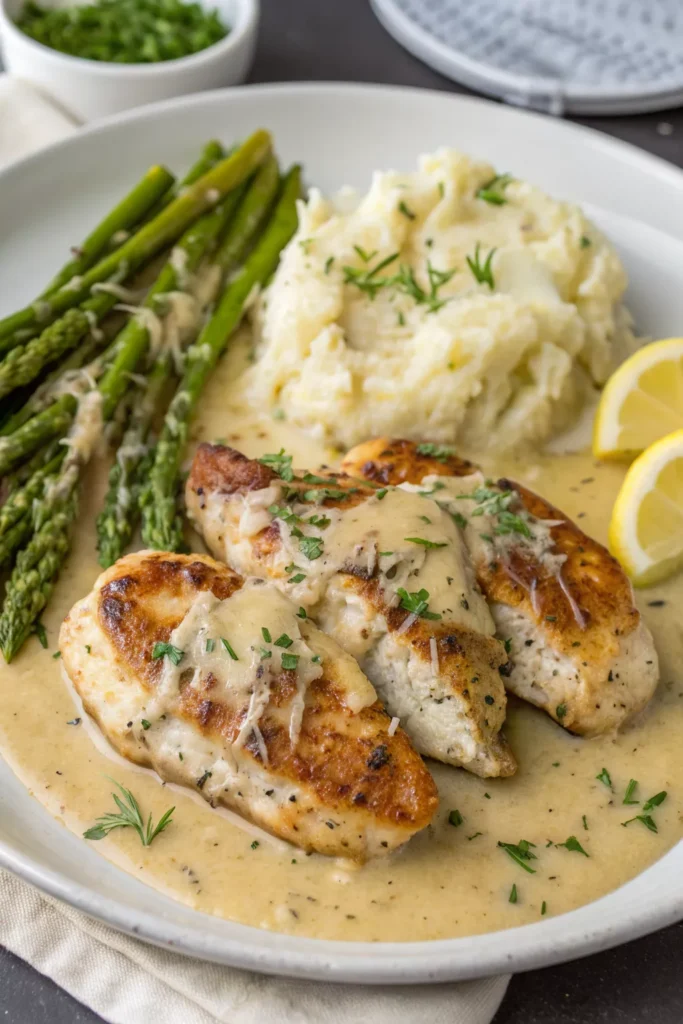
Garlic Parmesan Chicken is the weeknight answer to the eternal question of what to make for dinner that everyone will actually eat. It is a skillet dish with a crisp Parmesan-and-panko crust, a rich garlic butter sauce, and juicy chicken inside, and it goes from fridge to table in about 50 minutes start to finish.
Advertisements1
I started making this on the nights when I had chicken thighs in the fridge and zero patience for a complicated recipe. The trick is simple: pat the chicken dry, press the cheese coating on firmly, and let the pan do the work. You get that golden crust without deep frying, and the sauce comes together in the same skillet with the browned bits left behind.
If you have ever pulled chicken out of a pan and watched the coating slide right off, this recipe fixes that. The two-step dredge in flour then egg then Parmesan mixture is what keeps everything stuck where it belongs.
Why You'll Love This Recipe
About the Ingredients
6 boneless, skinless chicken thighs (about 1.5 lb / 680g), trimmed
Thighs stay juicy under the crust, but boneless skinless breasts work too; pound them to an even 3/4 inch so they cook at the same rate. Look for thighs that are similar in size so they brown evenly.
1/2 cup (60g) all-purpose flour
Flour gives the egg something to grip. For a gluten-free version, swap in an equal amount of fine white rice flour or a 1-to-1 gluten-free blend.
2 large eggs, beaten with 1 tablespoon water
The water thins the egg so it coats evenly instead of pooling. If you are out of eggs, 1/3 cup buttermilk or plain yogurt thinned with milk works as a binder.
1 cup (100g) panko breadcrumbs
Panko is coarser than standard breadcrumbs and gives a crunchier crust. Regular breadcrumbs will work but the coating will be denser and less crisp.
3/4 cup (75g) freshly grated Parmesan, plus more for serving
Grate it yourself from a block; pre-shredded cheese is coated with starch and melts poorly. Pecorino Romano is a sharper, saltier substitute if you like.
1 teaspoon garlic powder, plus 1 teaspoon kosher salt and 1/2 teaspoon black pepper
Garlic powder goes into the coating for flavor in every bite. Use granulated garlic if that is what you have; it is slightly milder.
1/4 cup (60ml) olive oil, for shallow frying
You need enough oil to reach about 1/4 inch up the side of the pan. Avocado oil has a higher smoke point if you tend to run your burner hot.
4 cloves garlic, minced, for the sauce
Fresh garlic is the whole point of the sauce, so do not skip it. Mince it fine so it flavors the butter without burning.
3 tablespoons unsalted butter
Butter finishes the sauce and adds body. If you only have salted butter, cut the added salt in the sauce to a pinch.
1/2 cup (120ml) low-sodium chicken broth
Broth deglazes the pan and becomes the sauce base. Vegetable broth or a splash of dry white wine both work well here.
1 tablespoon fresh lemon juice, plus chopped parsley for garnish
Lemon brightens the buttery sauce so it does not taste heavy. Bottled lemon juice is fine in a pinch, but fresh tastes noticeably better.
Tips & Tricks
- Pat the chicken completely dry with paper towels before dredging. Any surface moisture steams the coating instead of frying it, and that is the number one reason crusts fall off.
- Do not crowd the pan. Cook the chicken in two batches if needed so each piece has room; crowded chicken drops the oil temperature and turns soggy.
- Let the cooked chicken rest on a wire rack, not a paper towel-lined plate. A rack keeps the bottom crust crisp instead of trapping steam underneath.
- Grate your own Parmesan. The cellulose coating on pre-shredded cheese keeps it from melting into the crust properly.
Pro Tips
Step-by-Step Instructions
1. Prep the chicken
Pat the thighs dry and season both sides with 1/2 teaspoon of the salt and the pepper. Let them sit at room temperature for 10 minutes while you set up your dredging stations.
2. Set up three dishes
Put the flour in one shallow dish, the beaten eggs in a second, and combine the panko, Parmesan, garlic powder, and remaining 1/2 teaspoon salt in a third. Mix the panko mixture with your fingers so the cheese is evenly distributed.
3. Dredge each piece
Coat a thigh in flour and shake off the excess, dip it in egg, then press it firmly into the panko mixture on both sides. Set the coated pieces on a plate and repeat with the rest.
4. Heat the oil
Pour the olive oil into a large skillet to a depth of about 1/4 inch and heat over medium-high until it reaches 350F (175C), or until a pinch of panko sizzles the moment it touches the oil.
5. Fry until golden
Lay the chicken in the pan without crowding and cook for 5 to 6 minutes per side, until the crust is deep golden brown and the internal temperature reads 165F (74C). Work in batches if your pan is smaller than 12 inches.
6. Rest and drain
Move the chicken to a wire rack set over a sheet pan and let it rest for 5 minutes while you make the sauce. The resting juices redistribute so the meat stays juicy.
7. Build the garlic butter sauce
Pour off all but 1 tablespoon of the oil, lower the heat to medium, and add the butter and garlic. Cook for 30 to 45 seconds until fragrant, then pour in the broth and simmer for 2 to 3 minutes until slightly thickened.
8. Finish and serve
Stir the lemon juice into the sauce, taste for salt, and spoon it over the chicken. Scatter parsley and extra Parmesan on top and serve right away.
Delicious Variations
Baked Garlic Parmesan Chicken
Skip the shallow fry and bake the coated thighs on an oiled sheet pan at 425F (220C) for 20 to 25 minutes, flipping once, for a lighter version with less cleanup.
Spicy Garlic Parmesan Chicken
Add 1/2 teaspoon red pepper flakes to the panko mixture and a pinch to the sauce for a slow-building heat that pairs well with the Parmesan.
Air Fryer Garlic Parmesan Chicken
Spray the coated chicken with oil and air fry at 400F (200C) for 12 to 14 minutes, flipping halfway, when you want the crunch without heating a pan of oil.
How to Store Garlic Parmesan Chicken
Refrigerator
Store leftovers in an airtight container in the refrigerator for up to 3 days. Keep the sauce separate if you can so the crust does not get soft.
Freezer
Freeze cooked chicken pieces on a sheet pan until solid, then transfer to a freezer bag for up to 2 months. The coating will lose some crispness but the flavor holds up well.
Reheating
Reheat in a 375F (190C) oven or air fryer for 8 to 10 minutes to bring the crust back to life. Avoid the microwave, which steams the coating into mush.
Frequently Asked Questions
Q: How do I keep the Parmesan crust from falling off the chicken?
Pat the chicken bone dry before dredging and press the panko mixture on firmly with your palm. The flour-egg-panko sequence creates a glue layer, so do not skip the flour step or the coating will slide off in the pan.
Q: Can I use chicken breasts instead of thighs?
Yes, boneless skinless breasts work fine, but pound them to an even 3/4 inch thickness first. They cook faster than thighs, so start checking for doneness around 4 minutes per side.
Q: What temperature should the chicken be cooked to?
Chicken is safely cooked at 165F (74C) when measured with an instant-read thermometer in the thickest part. Pull it right at that temperature and let it rest, since it will continue to rise a few degrees.
Q: Why did my garlic turn bitter in the sauce?
Garlic burns quickly in hot oil and turns bitter in seconds, so add it after you lower the heat and cook it for under a minute. If it starts to brown too fast, pull the pan off the burner and add the broth immediately.
Q: Can I make this garlic Parmesan chicken ahead of time?
You can dredge the chicken up to 4 hours ahead and keep it covered in the refrigerator, which actually helps the coating set. Fry it fresh for the best crust, then reheat leftovers in the oven rather than the microwave.
Give this Garlic Parmesan Chicken a spot in your dinner rotation this week and see how fast it disappears. Try this today: grab a block of Parmesan and a pack of chicken thighs on your next grocery run, and let me know how the crust turned out. Small steps, big impact.
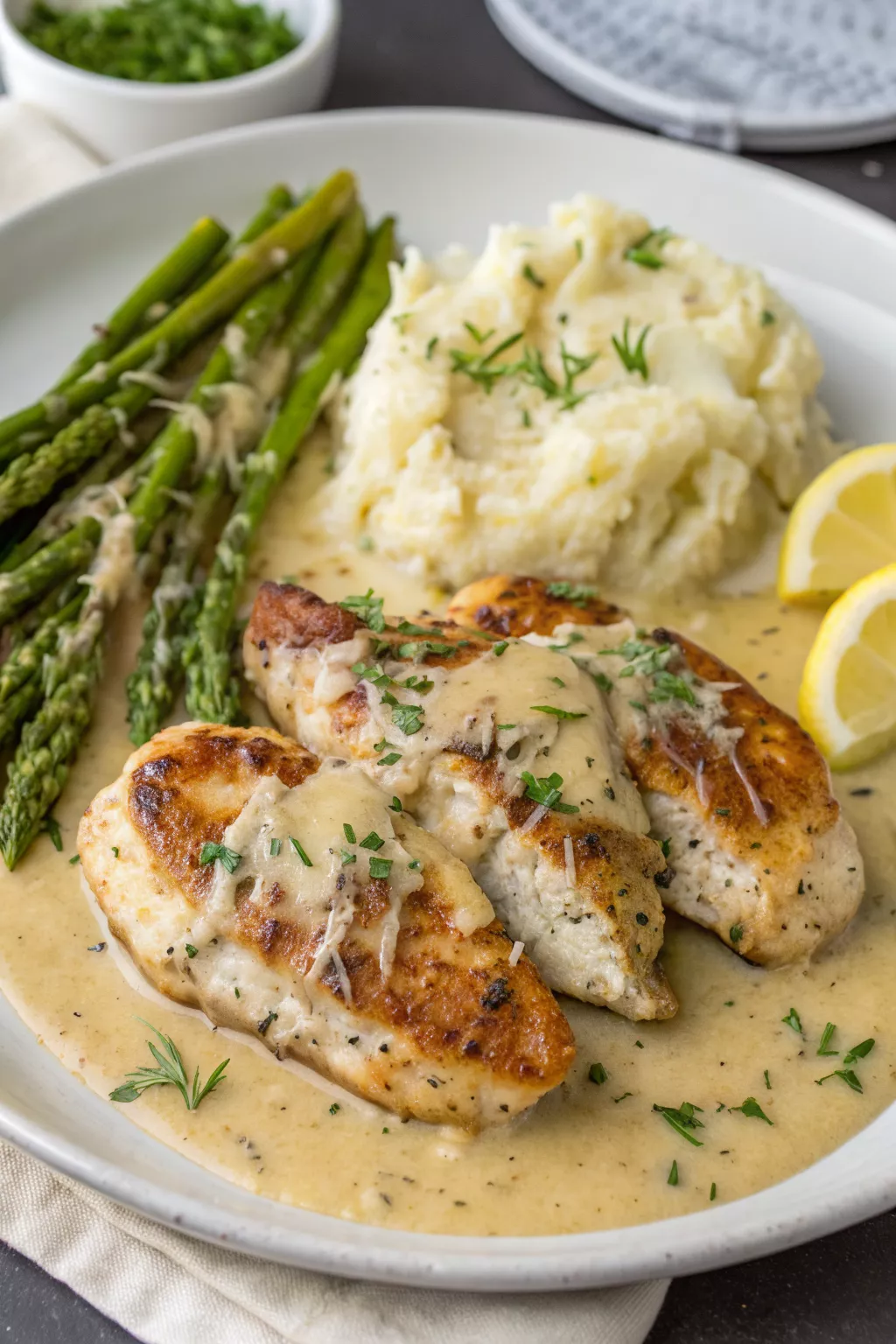
Garlic Parmesan Chicken
Garlic Parmesan Chicken with a golden, cheesy crust and garlic butter pan sauce is a 30-minute skillet dinner your whole family will ask for again.
🧂 Ingredients
- 6 boneless, skinless chicken thighs (about 1.5 lb / 680g), trimmed
- 1/2 cup (60g) all-purpose flour
- 2 large eggs, beaten with 1 tablespoon water
- 1 cup (100g) panko breadcrumbs
- 3/4 cup (75g) freshly grated Parmesan, plus more for serving
- 1 teaspoon garlic powder, plus 1 teaspoon kosher salt and 1/2 teaspoon black pepper
- 1/4 cup (60ml) olive oil, for shallow frying
- 4 cloves garlic, minced, for the sauce
- 3 tablespoons unsalted butter
- 1/2 cup (120ml) low-sodium chicken broth
- 1 tablespoon fresh lemon juice, plus chopped parsley for garnish
📋 Instructions
- 1Prep the chicken — Pat the thighs dry and season both sides with 1/2 teaspoon of the salt and the pepper. Let them sit at room temperature for 10 minutes while you set up your dredging stations.
- 2Set up three dishes — Put the flour in one shallow dish, the beaten eggs in a second, and combine the panko, Parmesan, garlic powder, and remaining 1/2 teaspoon salt in a third. Mix the panko mixture with your fingers so the cheese is evenly distributed.
- 3Dredge each piece — Coat a thigh in flour and shake off the excess, dip it in egg, then press it firmly into the panko mixture on both sides. Set the coated pieces on a plate and repeat with the rest.
- 4Heat the oil — Pour the olive oil into a large skillet to a depth of about 1/4 inch and heat over medium-high until it reaches 350F (175C), or until a pinch of panko sizzles the moment it touches the oil.
- 5Fry until golden — Lay the chicken in the pan without crowding and cook for 5 to 6 minutes per side, until the crust is deep golden brown and the internal temperature reads 165F (74C). Work in batches if your pan is smaller than 12 inches.
- 6Rest and drain — Move the chicken to a wire rack set over a sheet pan and let it rest for 5 minutes while you make the sauce. The resting juices redistribute so the meat stays juicy.
- 7Build the garlic butter sauce — Pour off all but 1 tablespoon of the oil, lower the heat to medium, and add the butter and garlic. Cook for 30 to 45 seconds until fragrant, then pour in the broth and simmer for 2 to 3 minutes until slightly thickened.
- 8Finish and serve — Stir the lemon juice into the sauce, taste for salt, and spoon it over the chicken. Scatter parsley and extra Parmesan on top and serve right away.

Maya writes about sustainable living and zero-waste practices, focusing on small, actionable changes that fit into busy routines. She shares practical tips from her own journey of reducing waste at home and in the community.