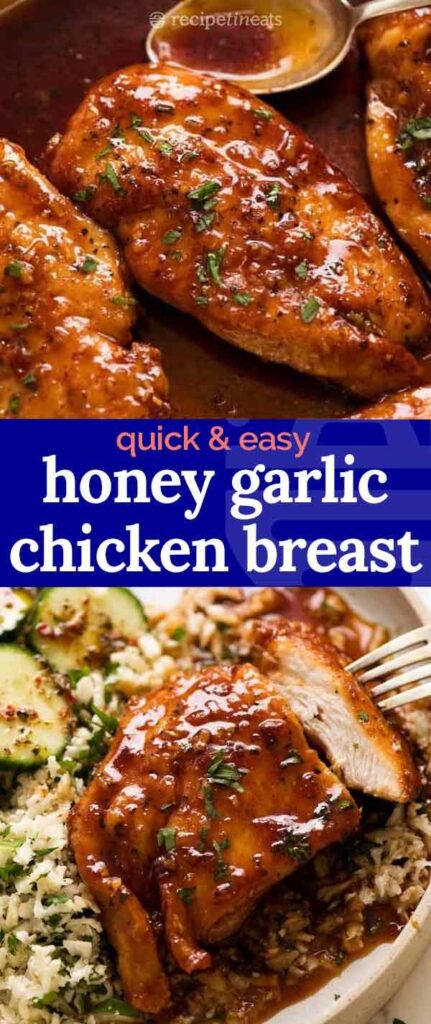
Honey Garlic Chicken Breast is a four-ingredient sauce math problem: sugar, salt, acid, and aromatics reduced until they coat the back of a spoon. Get the ratio right and you have a weeknight dinner that outperforms most restaurant chicken at roughly one-third the cost.
Advertisements1
The failure mode is almost always heat management. Honey burns at a lower threshold than most cooks assume, and garlic goes from sweet to acrid in under 30 seconds. This recipe sequences both so the sauce caramelizes without turning bitter, and the chicken finishes at 165F (74C) without drying out.
Think of it like compounding interest: small, consistent inputs – a proper sear, a controlled simmer, a two-minute rest – produce a result far larger than the sum of the parts. Skip a step and the whole position collapses.
Why You'll Love This Recipe
About the Ingredients
6 boneless, skinless chicken breasts (about 6 oz / 170g each)
Look for breasts of even thickness; if they are thick, pound them to a uniform 3/4 inch so they cook at the same rate. Substitute boneless thighs, but add 4 to 5 minutes of cook time.
1 1/2 tsp kosher salt
Kosher salt dissolves more evenly than table salt on raw protein. If using fine table salt, cut the amount to 1 tsp.
1 tsp freshly ground black pepper
Pre-ground pepper loses volatile oils fast; grinding to order gives noticeably more bite. A coffee grinder reserved for spices works if you lack a mill.
2 tbsp olive oil, divided
Any neutral high-smoke-point oil works – avocado or canola are fine. Do not use extra-virgin for the sear; it smokes below 400F (204C).
6 cloves garlic, minced (about 2 tbsp)
Fresh garlic only here; the jarred stuff carries a metallic preservative note that concentrates when reduced. Mince fine so it distributes evenly.
1/2 cup honey
Clover or wildflower honey is neutral enough to let the garlic read. Avoid buckwheat or other dark varietals – their flavor overwhelms the sauce.
1/3 cup low-sodium soy sauce
Low-sodium matters because the sauce reduces by roughly a third, concentrating salt. Tamari is a straight swap for gluten-free needs.
2 tbsp apple cider vinegar
The acid cuts the sweetness and keeps the glaze from tasting flat. Rice vinegar or fresh lemon juice both substitute at a 1:1 ratio.
1 tsp cornstarch whisked into 2 tbsp cold water
This slurry is what turns a thin pan liquid into a clinging glaze. Arrowroot starch works but thickens at a lower temperature, so pull the pan off heat sooner.
2 tbsp unsalted butter, cold, cubed
Cold butter emulsifies into the sauce and adds gloss. Salted butter works; just reduce the kosher salt above by 1/4 tsp.
2 scallions, thinly sliced, for garnish
Adds color and a raw allium bite that contrasts the sweet glaze. Thinly sliced chives or toasted sesame seeds are fine stand-ins.
Tips & Tricks
- Do not crowd the pan. Six breasts in a 12-inch skillet will steam rather than sear; work in two batches and add oil as needed.
- Watch the garlic clock. Once it hits the oil it has roughly 30 seconds before it turns bitter – have the honey mixture pre-whisked and within arm's reach.
- Pull the chicken at 160F (71C), not 165F. Carryover cooking during the rest brings it to a safe 165F (74C) while keeping the interior juicy.
- Whisk the slurry again right before adding it. Cornstarch settles within a minute and a lumpy sauce will not smooth out once it hits the heat.
Pro Tips
Step-by-Step Instructions
1. Prep and season the chicken
Pat the breasts completely dry, then season both sides with the kosher salt and black pepper. Let them sit at room temperature for 10 minutes while you mince the garlic and whisk the honey, soy sauce, and vinegar together in a small bowl.
2. Sear the first batch
Heat 1 tbsp olive oil in a large skillet over medium-high heat until it shimmers, roughly 375F (190C). Add three breasts and cook 5 to 6 minutes per side, until deeply golden brown and the internal temperature reads 160F (71C). Transfer to a plate and repeat with the remaining oil and chicken.
3. Bloom the garlic
Reduce the heat to medium. Add the minced garlic to the pan and stir constantly for 30 seconds, just until fragrant – it should smell sweet, never sharp or acrid. If it darkens past pale gold, discard it and start the sauce over.
4. Build the glaze
Pour in the honey mixture and bring to a gentle simmer. Cook 3 minutes, stirring, until the liquid reduces by about a third and bubbles thicken at the edges of the pan.
5. Thicken with slurry
Whisk the cornstarch slurry once more, then stream it into the simmering sauce while stirring. Cook 60 to 90 seconds, until the sauce coats the back of a spoon and no longer runs off in a thin stream.
6. Finish with butter
Pull the pan off the heat and swirl in the cold butter cubes one at a time until the sauce turns glossy and slightly opaque. This step is what gives the glaze its restaurant sheen.
7. Return and coat
Add the chicken back to the pan along with any accumulated juices. Spoon the sauce over each breast and simmer 2 minutes over low heat, just until the internal temperature reaches 165F (74C).
8. Rest and serve
Move the chicken to a cutting board and rest 5 minutes. Slice against the grain, arrange on plates, and spoon the pan glaze over the top. Garnish with sliced scallions.
Delicious Variations
Spicy Honey Garlic
Add 1 tsp red pepper flakes with the garlic and 1 tsp sriracha to the honey mixture for a sweet-heat version.
Honey Garlic Chicken Thighs
Swap in 6 boneless thighs and cook 7 to 8 minutes per side; the higher fat content tolerates the longer sear.
Honey Garlic Chicken Stir-Fry
Cut the breasts into 1-inch cubes, sear 4 minutes total, then add 1 cup broccoli florets and double the sauce.
How to Store Honey Garlic Chicken Breast
Refrigerator
Store in an airtight container for up to 4 days. The glaze will firm up when cold; that is the butter and cornstarch setting, not spoilage.
Freezer
Freeze in a sealed container for up to 3 months. Freeze the chicken in the sauce to prevent freezer burn on the exposed meat.
Reheating
Reheat gently in a covered skillet over medium-low heat with 1 tbsp water for 6 to 8 minutes. A microwave works but will toughen the exterior; if you use one, cover and heat in 30-second intervals.
Frequently Asked Questions
Q: How do I stop the honey garlic sauce from burning?
Cook the sauce over medium, not high, heat and never walk away once the honey mixture goes in. Honey caramelizes fast above 350F (177C), and the sugar will go from amber to bitter in under a minute. If the pan starts smoking, pull it off the heat immediately and lower the burner before continuing.
Q: Can I make honey garlic chicken without cornstarch?
Yes, but the sauce will be thinner and will not cling to the meat. Reduce the honey mixture by half instead, about 5 to 6 minutes, and finish with the cold butter to add body. Arrowroot or potato starch also work as 1:1 substitutes.
Q: What internal temperature should chicken breast be cooked to?
Pull it at 165F (74C) measured at the thickest part of the breast. If you want a juicier result, pull at 160F (71C) and let it rest 5 minutes – carryover cooking will bring it to a safe 165F (74C). Always verify with an instant-read thermometer rather than relying on color.
Q: Why did my garlic turn bitter?
Garlic burns because it was cooked too long at too high a heat, usually in under 45 seconds. Add it after you have lowered the heat to medium and stir constantly, pulling the pan off the burner the moment it smells sweet. If it has already darkened, wipe the pan and start the sauce fresh.
Q: Can I use chicken thighs instead of breasts?
Yes, boneless skinless thighs substitute directly and are more forgiving of overcooking. Cook them 7 to 8 minutes per side over medium-high heat and target an internal temperature of 175F (79C) for the best texture. The sauce quantities in this recipe do not need adjusting.
Run the numbers on your own kitchen: this recipe costs roughly $2.10 per serving versus $14 or more for the same plate at a restaurant. Cook it once, note where your pan runs hot, and adjust. Invest in your knowledge.
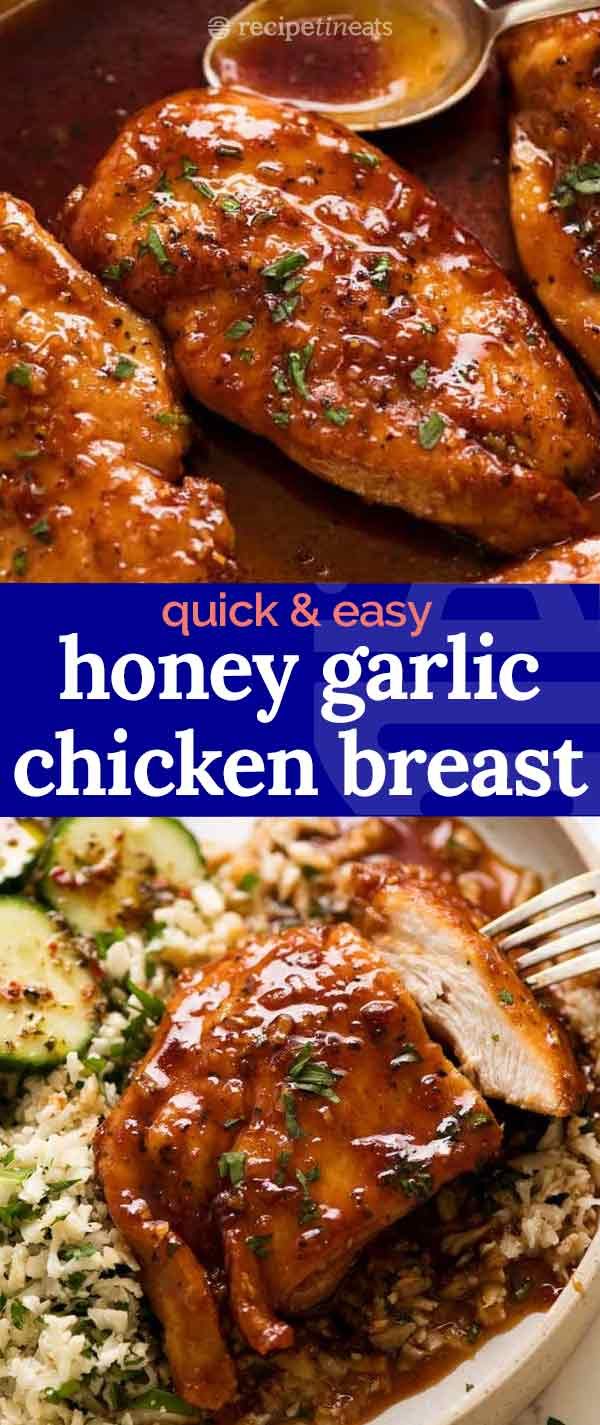
Honey Garlic Chicken Breast
Honey Garlic Chicken Breast delivers sticky, caramelized edges and juicy meat in one skillet, with a sauce that clings to every bite.
🧂 Ingredients
- 6 boneless, skinless chicken breasts (about 6 oz / 170g each)
- 1 1/2 tsp kosher salt
- 1 tsp freshly ground black pepper
- 2 tbsp olive oil, divided
- 6 cloves garlic, minced (about 2 tbsp)
- 1/2 cup honey
- 1/3 cup low-sodium soy sauce
- 2 tbsp apple cider vinegar
- 1 tsp cornstarch whisked into 2 tbsp cold water
- 2 tbsp unsalted butter, cold, cubed
- 2 scallions, thinly sliced, for garnish
📋 Instructions
- 1Prep and season the chicken — Pat the breasts completely dry, then season both sides with the kosher salt and black pepper. Let them sit at room temperature for 10 minutes while you mince the garlic and whisk the honey, soy sauce, and vinegar together in a small bowl.
- 2Sear the first batch — Heat 1 tbsp olive oil in a large skillet over medium-high heat until it shimmers, roughly 375F (190C). Add three breasts and cook 5 to 6 minutes per side, until deeply golden brown and the internal temperature reads 160F (71C). Transfer to a plate and repeat with the remaining oil and chicken.
- 3Bloom the garlic — Reduce the heat to medium. Add the minced garlic to the pan and stir constantly for 30 seconds, just until fragrant – it should smell sweet, never sharp or acrid. If it darkens past pale gold, discard it and start the sauce over.
- 4Build the glaze — Pour in the honey mixture and bring to a gentle simmer. Cook 3 minutes, stirring, until the liquid reduces by about a third and bubbles thicken at the edges of the pan.
- 5Thicken with slurry — Whisk the cornstarch slurry once more, then stream it into the simmering sauce while stirring. Cook 60 to 90 seconds, until the sauce coats the back of a spoon and no longer runs off in a thin stream.
- 6Finish with butter — Pull the pan off the heat and swirl in the cold butter cubes one at a time until the sauce turns glossy and slightly opaque. This step is what gives the glaze its restaurant sheen.
- 7Return and coat — Add the chicken back to the pan along with any accumulated juices. Spoon the sauce over each breast and simmer 2 minutes over low heat, just until the internal temperature reaches 165F (74C).
- 8Rest and serve — Move the chicken to a cutting board and rest 5 minutes. Slice against the grain, arrange on plates, and spoon the pan glaze over the top. Garnish with sliced scallions.

Marcus writes about personal finance and investing, with a focus on helping young professionals build wealth from scratch. He breaks down complex concepts into simple, actionable strategies.