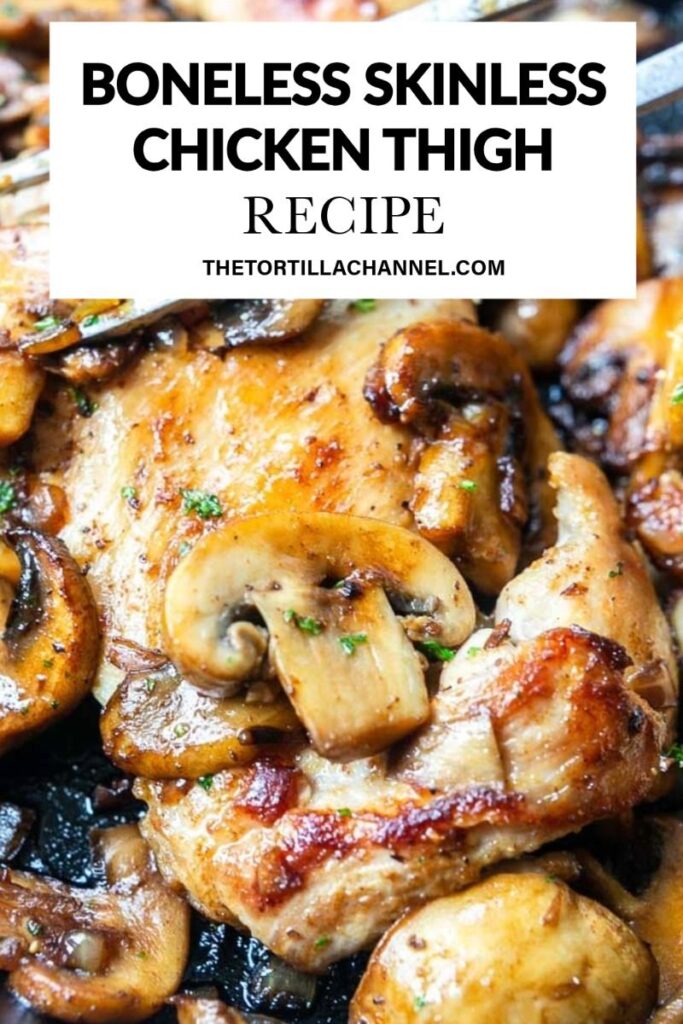
Boneless skinless chicken thighs are the most forgiving protein in the case. They carry roughly 25 percent more fat than a boneless skinless breast, and that fat is the reason they stay moist when a breast turns to sawdust at the same internal temperature. The trade-off is real: you must render that fat, or you get a greasy pan and rubbery skinless surface.
Advertisements1
This recipe treats the thigh like an asset with a known risk profile. You sear hard to build a Maillard crust, then finish in a 400 F (204 C) oven so the interior coasts to 175 F (79 C) without drying. Total active time is about 15 minutes; the oven does the rest.
The payoff is a weeknight dinner with a 6-serving yield, roughly 285 calories per serving, and a pan sauce built from the drippings you already paid for. No brine required, though a 30-minute dry salt helps if your schedule allows.
Why You'll Love This Recipe
About the Ingredients
2.5 lb (1130 g) boneless skinless chicken thighs, about 6 to 8 pieces
Buy thighs of even thickness so they finish at the same time; if they are uneven, pound them to a uniform 3/4 inch. Substitution: boneless skinless chicken breasts work, but reduce oven time to 12 to 15 minutes and pull at 165 F (74 C).
2 tsp kosher salt
Kosher salt dissolves faster and seasons more evenly than table salt. If using fine table salt, cut the amount to 1 1/4 tsp, since the crystals are denser.
1 tsp smoked paprika
Smoked paprika adds color and a low, sweet smoke note. Substitution: sweet Hungarian paprika plus 1/4 tsp liquid smoke, or ancho chili powder for heat.
1 tsp garlic powder
Granulated garlic disperses better than fresh in a dry rub and will not burn at high heat. Fresh minced garlic is better added to the pan sauce at the end.
1 tsp onion powder
Onion powder rounds out the rub with savory depth. Substitution: 1 tbsp dehydrated onion flakes crushed between your fingers.
1/2 tsp freshly ground black pepper
Pre-ground pepper loses volatile oils within weeks. Grind to order for a sharper bite; a coarse grind gives better crust texture.
1 tbsp olive oil
Use a neutral high-smoke-point oil like avocado or canola if your olive oil is extra virgin, which smokes around 375 F (190 C). Buying tip: look for a smoke point above 400 F (204 C) on the label.
1 tbsp unsalted butter
Butter adds flavor but burns fast; add it after the sear to baste. Substitution: ghee, which handles 450 F (232 C) without scorching.
3 cloves garlic, smashed and left whole
Smashed whole cloves flavor the pan without scorching into bitterness. Substitution: 1 tsp garlic paste stirred in during the last 30 seconds.
1 tbsp fresh lemon juice
Acid cuts the rendered fat and brightens the pan sauce. Substitution: 1 tbsp red wine vinegar or 2 tbsp dry white wine.
1/2 cup (120 ml) low-sodium chicken broth
Low-sodium lets you control the final salt level. Substitution: 1/2 cup water plus 1/2 tsp Better Than Bouillon.
2 tbsp chopped fresh parsley
Parsley adds a clean finish and visual contrast. Substitution: cilantro, chives, or 1 tsp dried oregano added with the rub.
Tips & Tricks
Dry the surface before searing
Pat the thighs completely dry with paper towels. Surface moisture has to evaporate before browning can start, which delays the crust by 3 to 4 minutes and steams the meat instead.
Do not crowd the skillet
Six to eight thighs need a 12-inch (30 cm) skillet or a sheet pan. Crowding drops the pan temperature below 300 F (149 C), and the meat releases water instead of browning.
Salt 30 minutes ahead if you can
Dry-brining for 30 minutes lets salt move into the meat and reabsorb. Salting right before cooking leaves salt on the surface, where it pulls moisture out during the sear.
Rest before slicing
A 5-minute rest lets juices redistribute. Cutting immediately loses roughly 1 to 2 tablespoons of liquid per thigh onto the board instead of into the meat.
Pro Tips
Step-by-Step Instructions
1. Dry and Season
Pat the thighs completely dry with paper towels, then coat both sides with the salt, smoked paprika, garlic powder, onion powder, and black pepper. Let them sit at room temperature for 15 minutes while the oven preheats to 400 F (204 C).
2. Heat the Skillet
Set a 12-inch (30 cm) cast-iron or heavy stainless skillet over medium-high heat for 3 to 4 minutes, until a drop of water sizzles and evaporates on contact, roughly 400 F (204 C) at the surface. Add the olive oil and swirl to coat.
3. Sear the First Side
Lay the thighs in the pan in a single layer with space between them. Sear undisturbed for 5 to 6 minutes, until the underside is deep golden brown and releases easily from the pan. If it sticks, it is not ready; give it another 60 seconds.
4. Flip and Baste
Flip each thigh and add the butter and smashed garlic cloves. Tilt the pan and spoon the foaming butter over the meat for 60 to 90 seconds, until the second side is golden and the butter smells nutty, not black.
5. Transfer to the Oven
Move the skillet to the preheated 400 F (204 C) oven and roast for 12 to 15 minutes, until the thickest thigh reads 175 F (79 C) on an instant-read thermometer. The juices should run clear, not pink.
6. Rest the Chicken
Transfer the thighs to a cutting board and tent loosely with foil. Rest for 5 minutes. The internal temperature will climb another 3 to 5 degrees during this carryover window.
7. Build the Pan Sauce
Pour off all but 1 tbsp of fat from the skillet. Set it over medium heat, add the chicken broth, and scrape the browned bits with a wooden spoon for 2 minutes, until the liquid reduces by about half and coats the spoon.
8. Finish and Serve
Off the heat, stir in the lemon juice and parsley, then taste and adjust salt. Slice the thighs against the grain into 1/2-inch strips, return them to the pan with any collected juices, and toss to coat before serving.
Delicious Variations
Sheet Pan Version
Toss the seasoned thighs with 1 lb (454 g) halved baby potatoes and 8 oz (227 g) green beans on a sheet pan, roast at 425 F (218 C) for 25 minutes, and skip the skillet entirely.
Spicy Harissa Glaze
Replace the smoked paprika with 2 tbsp harissa paste and add 1 tsp honey to the pan sauce for a sweet-hot finish that caramelizes under the broiler for 2 minutes.
Asian Ginger-Scallion
Swap the lemon and parsley for 1 tbsp soy sauce, 1 tsp sesame oil, 1 tbsp rice vinegar, and 3 sliced scallions, then finish with toasted sesame seeds.
How to Store Boneless Skinless Chicken Thigh Recipe
Refrigerator
Store cooled thighs in an airtight container for up to 4 days. Keep the pan sauce separate so the meat does not sit in liquid and turn mushy.
Freezer
Freeze whole or sliced thighs in a freezer-safe bag with the sauce for up to 3 months. Press out excess air to prevent freezer burn, which shows up as gray, dry patches.
Reheating
Reheat in a 325 F (163 C) oven for 10 to 12 minutes, or in a covered skillet over medium-low heat with 1 tbsp water. Avoid the microwave on high, which toughens the exterior in under 90 seconds.
Frequently Asked Questions
Q: What temperature should boneless skinless chicken thighs be cooked to?
Pull them at 175 F (79 C) for the best texture, though 165 F (74 C) is the USDA minimum for safety. The extra 10 degrees gives collagen time to convert to gelatin, which is why thighs stay juicy well past the breast meat limit.
Q: How long do boneless skinless chicken thighs take to cook?
Plan on 5 to 6 minutes of searing per side plus 12 to 15 minutes in a 400 F (204 C) oven, for about 25 to 30 minutes total cook time. Thinner thighs under 3/4 inch finish 3 to 4 minutes faster, so use a thermometer rather than a clock.
Q: Can I cook boneless skinless chicken thighs in an air fryer?
Yes, air fry at 400 F (204 C) for 12 to 14 minutes, flipping once at the halfway point. Air fryers run hotter and drier than ovens, so check at 11 minutes; the exterior browns faster than the interior cooks.
Q: Why did my chicken thighs come out tough?
The most common cause is undercooking, not overcooking: thighs pulled at 150 F (66 C) have tight, unrendered collagen and chew like rubber. The second cause is a wet surface, which steams the meat instead of searing it.
Q: Are boneless skinless chicken thighs healthy?
They are a strong choice at roughly 285 calories and 12 grams of fat per serving in this recipe, with about 34 grams of protein. The fat is mostly monounsaturated, and removing the skin cuts the total fat by roughly 40 percent compared to skin-on thighs.
Run the numbers on your own dinner: one skillet, 15 minutes of hands-on work, and a protein that tolerates a 15-degree swing without turning to cardboard. Cook it once, log the internal temperature you actually hit, and adjust from there. Invest in your knowledge.
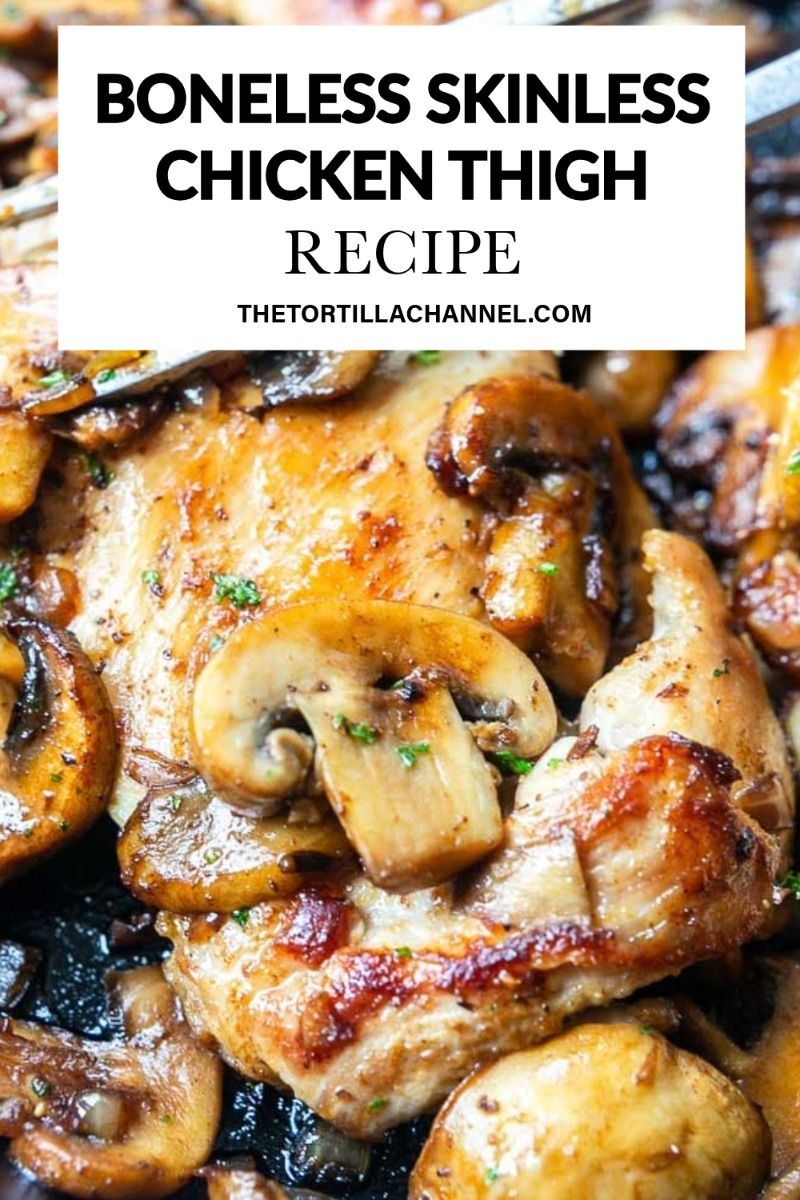
Boneless Skinless Chicken Thigh Recipe
This boneless skinless chicken thigh recipe delivers juicy, golden-seared meat in 40 minutes, a high-protein dinner that never dries out.
🧂 Ingredients
- 2.5 lb (1130 g) boneless skinless chicken thighs, about 6 to 8 pieces
- 2 tsp kosher salt
- 1 tsp smoked paprika
- 1 tsp garlic powder
- 1 tsp onion powder
- 1/2 tsp freshly ground black pepper
- 1 tbsp olive oil
- 1 tbsp unsalted butter
- 3 cloves garlic, smashed and left whole
- 1 tbsp fresh lemon juice
- 1/2 cup (120 ml) low-sodium chicken broth
- 2 tbsp chopped fresh parsley
📋 Instructions
- 1Dry and Season — Pat the thighs completely dry with paper towels, then coat both sides with the salt, smoked paprika, garlic powder, onion powder, and black pepper. Let them sit at room temperature for 15 minutes while the oven preheats to 400 F (204 C).
- 2Heat the Skillet — Set a 12-inch (30 cm) cast-iron or heavy stainless skillet over medium-high heat for 3 to 4 minutes, until a drop of water sizzles and evaporates on contact, roughly 400 F (204 C) at the surface. Add the olive oil and swirl to coat.
- 3Sear the First Side — Lay the thighs in the pan in a single layer with space between them. Sear undisturbed for 5 to 6 minutes, until the underside is deep golden brown and releases easily from the pan. If it sticks, it is not ready; give it another 60 seconds.
- 4Flip and Baste — Flip each thigh and add the butter and smashed garlic cloves. Tilt the pan and spoon the foaming butter over the meat for 60 to 90 seconds, until the second side is golden and the butter smells nutty, not black.
- 5Transfer to the Oven — Move the skillet to the preheated 400 F (204 C) oven and roast for 12 to 15 minutes, until the thickest thigh reads 175 F (79 C) on an instant-read thermometer. The juices should run clear, not pink.
- 6Rest the Chicken — Transfer the thighs to a cutting board and tent loosely with foil. Rest for 5 minutes. The internal temperature will climb another 3 to 5 degrees during this carryover window.
- 7Build the Pan Sauce — Pour off all but 1 tbsp of fat from the skillet. Set it over medium heat, add the chicken broth, and scrape the browned bits with a wooden spoon for 2 minutes, until the liquid reduces by about half and coats the spoon.
- 8Finish and Serve — Off the heat, stir in the lemon juice and parsley, then taste and adjust salt. Slice the thighs against the grain into 1/2-inch strips, return them to the pan with any collected juices, and toss to coat before serving.

Marcus writes about personal finance and investing, with a focus on helping young professionals build wealth from scratch. He breaks down complex concepts into simple, actionable strategies.