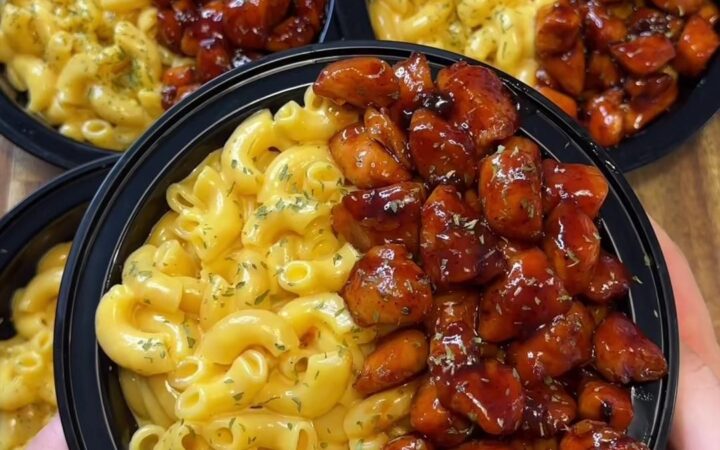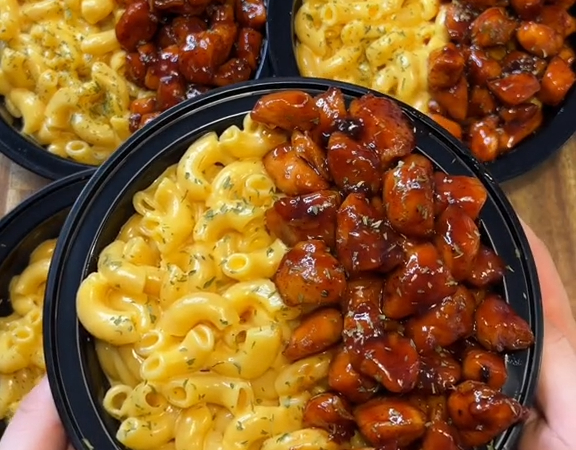
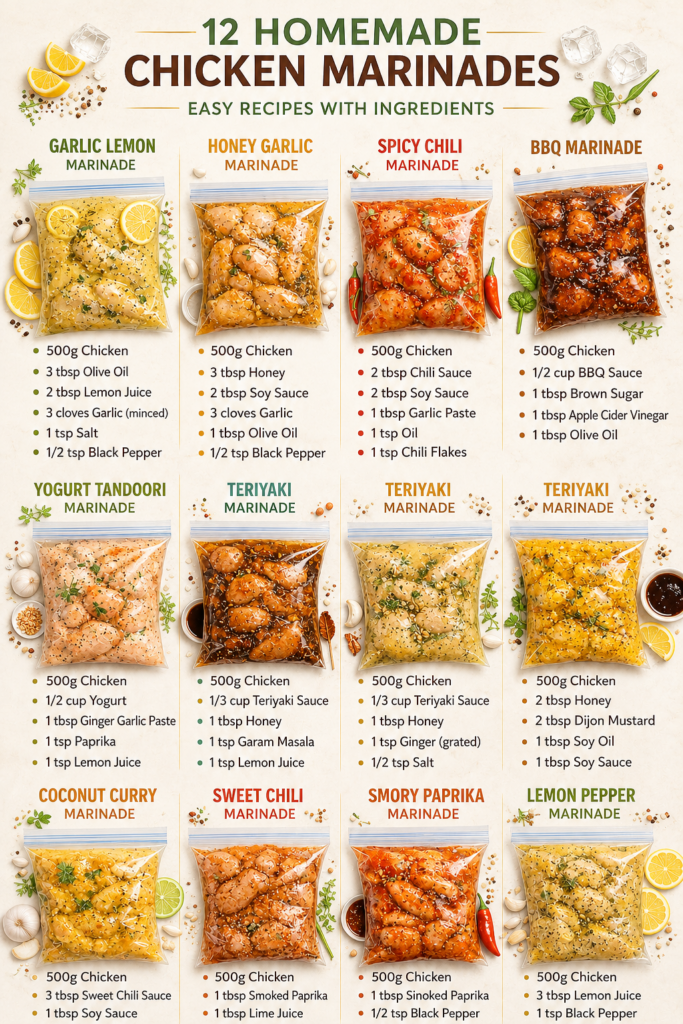
Twelve chicken marinades, one freezer bag system. That is the entire premise here, and it works because marinades are essentially liquid assets: you deposit flavor today, you withdraw it on a night when you have no time to cook. Each recipe below makes enough for 1.5 to 2 pounds of chicken, which is 4 to 6 servings depending on whether you are feeding adults or kids.
Advertisements1
The math matters more than the romance. A single 20-minute prep session on Sunday produces 12 bags, roughly 48 to 72 servings, at a cost of about $1.10 to $1.80 per serving of protein before sides. Compare that to takeout at $12 to $18 per person and the return on your 20 minutes is not subtle.
One risk to flag upfront: marinades are not all interchangeable. Acid-heavy ones (citrus, vinegar, wine) will turn chicken mushy past 12 hours, while oil-and-spice blends can sit 24 hours without issue. I note the safe window on every single one below, so you do not learn this the hard way with a $9 package of thighs.
Why You'll Love This Recipe
About the Ingredients
6 lbs (2.7 kg) boneless skinless chicken thighs or breasts, trimmed
Thighs stay juicier after freezing and reheating; breasts work but benefit from a 2-hour maximum marinade. Buy air-chilled if your store carries it, since it holds less added water and marinates more evenly.
1 cup (240 ml) low-sodium soy sauce, divided across Asian-style marinades
Low-sodium matters here because soy sauce concentrates slightly during freezing and thawing. Substitute tamari for gluten-free, or coconut aminos if you need to cut sodium further.
1/2 cup (120 ml) olive oil, divided
Oil carries fat-soluble flavor compounds from garlic, paprika, and herbs into the meat. Any neutral oil works; avocado oil has a higher smoke point if you plan to grill hot.
1/3 cup (80 ml) fresh lemon juice, about 2 large lemons
Bottled lemon juice is pasteurized and tastes flatter, so squeeze fresh if you can. Lime juice substitutes one-for-one in the cilantro-lime and fajita blends.
1/3 cup (80 ml) red wine vinegar
This is your acid backbone for the Greek and Italian blends. Apple cider vinegar is a softer substitute; balsamic will darken the color and add sugar.
1/4 cup (60 ml) honey, warmed slightly
Honey balances acid and promotes browning on the grill, but it burns above 400F (204C). Maple syrup or agave substitutes directly; reduce to 3 tablespoons if you want less sweetness.
10 cloves garlic, minced, about 3 tablespoons
Fresh minced garlic outperforms jarred by a wide margin in blind tastings because jarred garlic is acidified and tastes cooked already. Garlic powder at 1 teaspoon per clove is the emergency substitute.
2 tbsp (14 g) smoked paprika
Smoked paprika gives the BBQ and fajita blends their depth without added heat. Sweet paprika is milder; chipotle powder swaps in if you want smoke plus spice.
2 tbsp (6 g) dried oregano
Oregano is the defining herb in the Greek and Italian marinades. Marjoram is the closest substitute; thyme works but shifts the profile toward French.
1 tbsp (6 g) ground cumin
Cumin anchors the fajita and shawarma blends. Toast whole seeds and grind them for a noticeably stronger result, or use 2 teaspoons if you find it aggressive.
2 tsp (12 g) kosher salt, plus more for seasoning
Kosher salt dissolves faster in oil-based marinades than table salt. If using fine table salt, cut the amount by about one-third.
1 tbsp (3 g) red pepper flakes, optional
Red pepper flakes add heat that survives freezing well. Gochugaru is a fruitier substitute; skip entirely for kid-friendly batches.
Tips & Tricks
Do Not Over-Marinade
Acid-based blends (lemon, vinegar, wine) break down muscle fibers past 12 hours and produce a chalky texture. Cap those at 12 hours, and cap oil-and-spice blends at 24 hours.
Freeze Flat, Thaw Slow
Lay bags flat in a single layer on a sheet pan before freezing so they stack like files. Thaw 24 hours in the fridge, never on the counter, because the outside of the chicken warms faster than the inside.
Squeeze Out the Air
Press the bag until the marinade coats every piece and the plastic touches the meat. Air pockets cause freezer burn, which is a texture problem, not a safety problem, but it is avoidable.
Label With a Date and a Name
Masking tape and a Sharpie cost nothing. Unlabeled bags become mystery meat within three weeks, and you will throw away food you already paid for.
Pro Tips
Step-by-Step Instructions
1. Set Up Your Station
Lay out 12 quart-sized freezer bags on the counter and label each with the marinade name and today's date. Mise en place is not decoration; it is the difference between 20 minutes and 45 minutes of chaos.
2. Whisk the Wet Bases
In a large bowl, combine the soy sauce, olive oil, lemon juice, vinegar, and warmed honey. Whisk 30 seconds until the honey fully disperses, since it will otherwise settle at the bottom of the bag.
3. Build the Twelve Blends
Divide the wet base among the bags, then add the aromatics per blend: garlic and oregano for Greek, cumin and smoked paprika for fajita, honey and soy for teriyaki-style, and so on. Each bag should hold roughly 1/3 cup (80 ml) of liquid.
4. Add the Chicken
Cut the chicken into even 1-inch (2.5 cm) pieces or leave thighs whole, then divide among the bags, about 8 oz (227 g) per bag. Even sizing matters because uneven pieces cook at different rates.
5. Seal and Massage
Press out the air, seal, and massage each bag for 10 seconds so the marinade contacts every surface. This is functionally a 10-second shortcut that replaces 2 hours of passive marinating on the outside of the meat.
6. Freeze Flat
Place bags in a single layer on a sheet pan and freeze 3 to 4 hours until solid, then stack upright. Flat-freezing cuts thaw time roughly in half versus a frozen lump.
7. Thaw Overnight
Move one bag to the refrigerator 24 hours before cooking. A 1.5-pound (680 g) bag thaws in 18 to 24 hours at 38F (3C); anything faster risks the outer meat sitting in the danger zone.
8. Cook to Temperature
Cook chicken in a skillet over medium-high heat at 375F to 400F (190C to 204C) for 6 to 8 minutes per side until golden brown and the internal temperature reads 165F (74C) for breasts or 175F (79C) for thighs. Alternatively, roast at 425F (218C) for 20 to 25 minutes on a sheet pan until edges bubble and caramelize.
9. Rest Before Slicing
Rest the cooked chicken 5 minutes on a cutting board before slicing. Juices redistribute during rest; cutting immediately loses roughly 10 to 15 percent of the moisture to the board.
Delicious Variations
Greek Lemon-Oregano
Lemon juice, olive oil, garlic, oregano, and a pinch of red pepper flakes. Best on thighs; pairs with rice, tzatziki, and cucumber salad.
Smoky Fajita
Cumin, smoked paprika, lime juice, garlic, and olive oil. Works on breasts or thighs and slices cleanly for tacos, bowls, and quesadillas.
Honey-Soy Teriyaki-Style
Soy sauce, honey, garlic, ginger, and a splash of rice vinegar. Watch the sugar on the grill; it caramelizes fast above 400F (204C).
How to Store 12 Homemade Chicken Marinades (Freezer-Friendly) Easy Meal Prep Recipes
Refrigerator
Marinated raw chicken keeps 24 hours in the fridge for acid-based blends and up to 48 hours for oil-and-spice blends. Cooked chicken keeps 4 days in an airtight container at 40F (4C) or below.
Freezer
Freeze raw marinated chicken up to 3 months at 0F (-18C). After 3 months the texture degrades even though safety holds, so date every bag and rotate oldest-first.
Reheating
Reheat covered at 300F (149C) for 12 to 15 minutes, or in a skillet over medium heat for 5 to 6 minutes with a tablespoon of water to create steam. Microwave works at 50 percent power in 60-second bursts but dries the edges.
Frequently Asked Questions
Q: How long can you marinate chicken in the fridge?
Twelve hours maximum for acid-based marinades and 24 hours for oil-and-spice blends. Past those windows the texture turns mealy because the acid continues denaturing surface proteins even at refrigerator temperatures.
Q: Can you freeze chicken in marinade?
Yes, and it is the most efficient way to meal prep chicken because the marinade penetrates as the bag thaws. Freeze flat for up to 3 months at 0F (-18C), then thaw 24 hours in the fridge before cooking.
Q: Do you need to thaw chicken before cooking it?
You should thaw it, yes, because cooking from frozen produces uneven results: the outside overcooks while the center stays under 165F (74C). If you are pressed for time, thaw in a sealed bag under cold running water for 30 to 45 minutes.
Q: What is the best chicken cut for freezer marinades?
Boneless skinless thighs are the best cut because their higher fat content survives freezing and reheating without drying out. Breasts work but should be marinated no more than 2 hours and reheated gently at 300F (149C).
Q: How much marinade do you need per pound of chicken?
Use about 1/4 to 1/3 cup (60 to 80 ml) of marinade per pound (454 g) of chicken. More than that wastes ingredients because the meat can only absorb so much, and it makes the bags bulky in the freezer.
Mix twelve bags on a Sunday, and you have effectively pre-paid for six weeks of dinners at a fraction of delivery cost. Track what you spend on the first batch, compare it to your last grocery delivery order, and the decision makes itself. Invest in your knowledge.
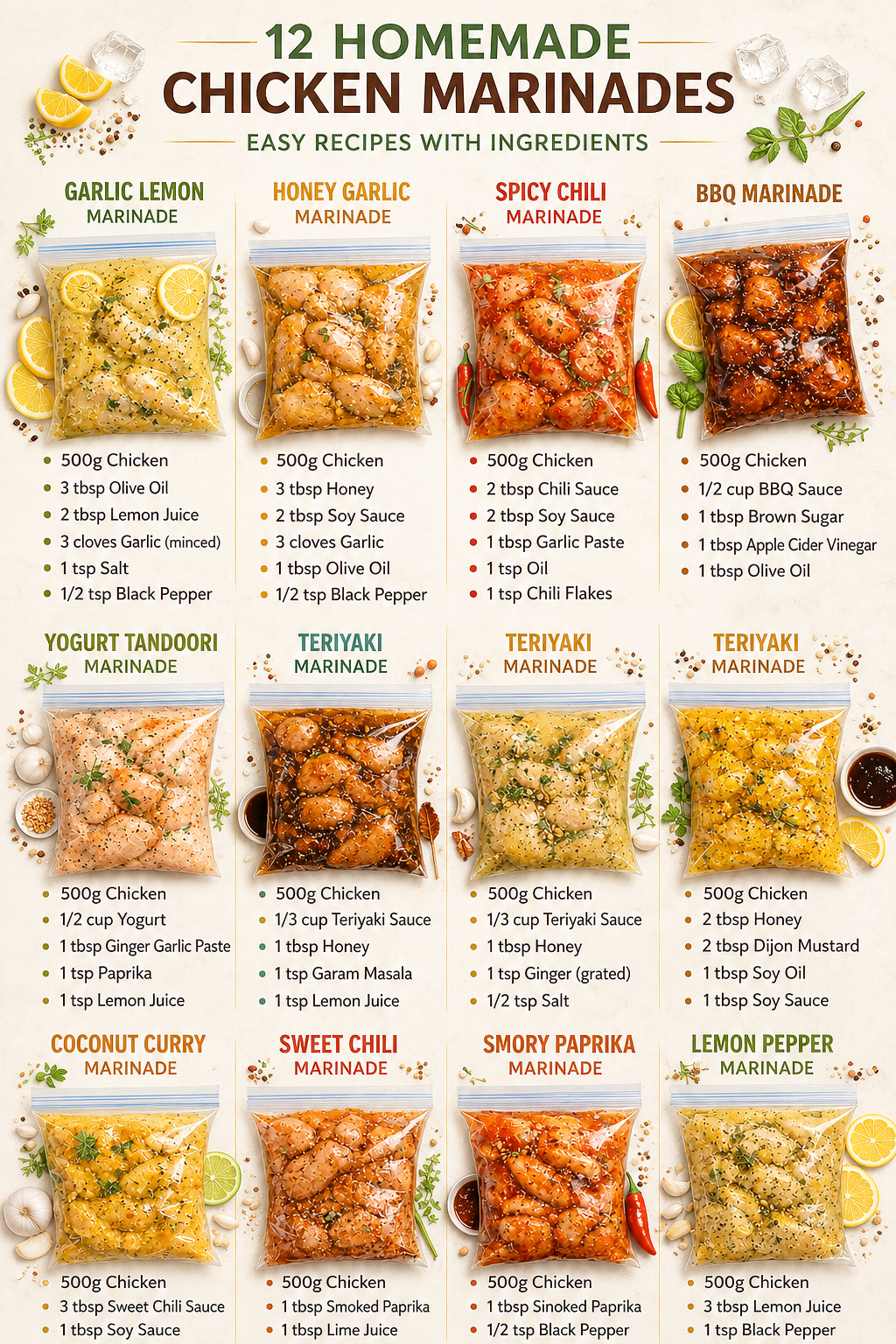
12 Homemade Chicken Marinades (Freezer-Friendly) Easy Meal Prep Recipes
12 homemade chicken marinades that are freezer-friendly and built for easy meal prep, so weeknight dinners go from frozen to flavorful fast.
🧂 Ingredients
- 6 lbs (2.7 kg) boneless skinless chicken thighs or breasts, trimmed
- 1 cup (240 ml) low-sodium soy sauce, divided across Asian-style marinades
- 1/2 cup (120 ml) olive oil, divided
- 1/3 cup (80 ml) fresh lemon juice, about 2 large lemons
- 1/3 cup (80 ml) red wine vinegar
- 1/4 cup (60 ml) honey, warmed slightly
- 10 cloves garlic, minced, about 3 tablespoons
- 2 tbsp (14 g) smoked paprika
- 2 tbsp (6 g) dried oregano
- 1 tbsp (6 g) ground cumin
- 2 tsp (12 g) kosher salt, plus more for seasoning
- 1 tbsp (3 g) red pepper flakes, optional
📋 Instructions
- 1Set Up Your Station — Lay out 12 quart-sized freezer bags on the counter and label each with the marinade name and today's date. Mise en place is not decoration; it is the difference between 20 minutes and 45 minutes of chaos.
- 2Whisk the Wet Bases — In a large bowl, combine the soy sauce, olive oil, lemon juice, vinegar, and warmed honey. Whisk 30 seconds until the honey fully disperses, since it will otherwise settle at the bottom of the bag.
- 3Build the Twelve Blends — Divide the wet base among the bags, then add the aromatics per blend: garlic and oregano for Greek, cumin and smoked paprika for fajita, honey and soy for teriyaki-style, and so on. Each bag should hold roughly 1/3 cup (80 ml) of liquid.
- 4Add the Chicken — Cut the chicken into even 1-inch (2.5 cm) pieces or leave thighs whole, then divide among the bags, about 8 oz (227 g) per bag. Even sizing matters because uneven pieces cook at different rates.
- 5Seal and Massage — Press out the air, seal, and massage each bag for 10 seconds so the marinade contacts every surface. This is functionally a 10-second shortcut that replaces 2 hours of passive marinating on the outside of the meat.
- 6Freeze Flat — Place bags in a single layer on a sheet pan and freeze 3 to 4 hours until solid, then stack upright. Flat-freezing cuts thaw time roughly in half versus a frozen lump.
- 7Thaw Overnight — Move one bag to the refrigerator 24 hours before cooking. A 1.5-pound (680 g) bag thaws in 18 to 24 hours at 38F (3C); anything faster risks the outer meat sitting in the danger zone.
- 8Cook to Temperature — Cook chicken in a skillet over medium-high heat at 375F to 400F (190C to 204C) for 6 to 8 minutes per side until golden brown and the internal temperature reads 165F (74C) for breasts or 175F (79C) for thighs. Alternatively, roast at 425F (218C) for 20 to 25 minutes on a sheet pan until edges bubble and caramelize.
- 9Rest Before Slicing — Rest the cooked chicken 5 minutes on a cutting board before slicing. Juices redistribute during rest; cutting immediately loses roughly 10 to 15 percent of the moisture to the board.

Marcus writes about personal finance and investing, with a focus on helping young professionals build wealth from scratch. He breaks down complex concepts into simple, actionable strategies.