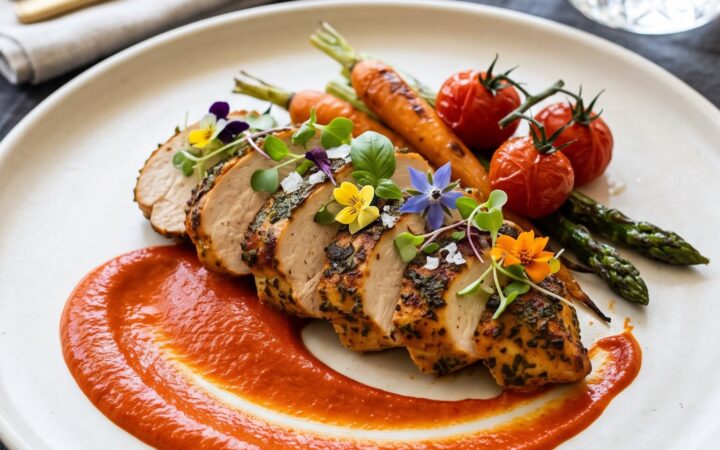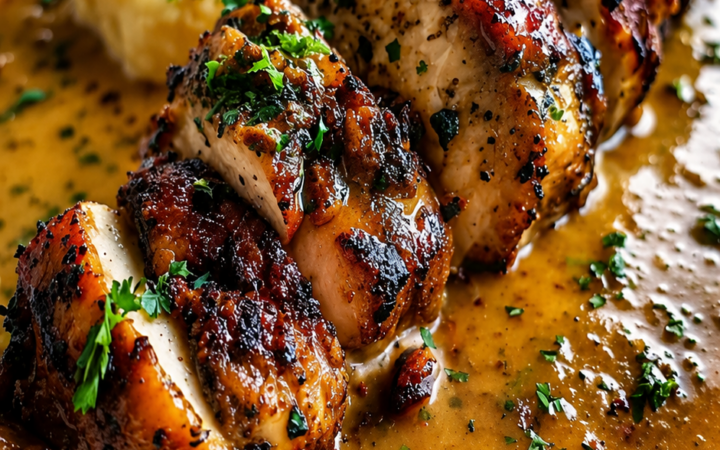

The Secret to Seriously Juicy Chicken Breast Tonight is a brine-and-sear method that fixes the single biggest failure point in home cooking: dry, chalky chicken. Most people cook chicken breast to 165F (74C) and pull it immediately, which guarantees a dry result because carryover cooking pushes the internal temperature 5-8F higher.
Advertisements1
The fix has two parts. First, a 15-minute saltwater brine raises the meat's water-holding capacity, so it loses less moisture during cooking. Second, a hard sear in a hot pan followed by a short oven finish gets you a golden-brown crust and an internal temperature of exactly 160F (71C) when you pull it, which carries up to 165F (74C) during the rest.
Think of it like dollar-cost averaging: small, consistent inputs produce a better outcome than one big gamble. Brine, sear, rest, slice. Do those four things and your chicken breast stops being a risk and starts being a reliable asset. Invest in your knowledge.
Why You'll Love This Recipe
About the Ingredients
4 boneless, skinless chicken breasts, about 2.5 lb (1.13 kg) total
Look for breasts of even thickness; if one end is much thicker, pound it to about 1 inch (2.5 cm) so it cooks evenly. Substitution: boneless skinless thighs work but need 5-7 extra minutes and reach 175F (79C).
1/4 cup (72 g) kosher salt, for the brine
Use kosher salt, not table salt, because the crystal size differs and table salt will over-salt the brine. Buying tip: Diamond Crystal is about half as salty by volume as Morton, so check the brand before measuring.
6 cups (1.4 L) cold water, for the brine
Cold water keeps the chicken out of the bacterial danger zone while it brines. Substitution: half water and half buttermilk adds a mild tang and works just as well.
2 tbsp (30 ml) olive oil, divided
Olive oil carries the seasoning and prevents sticking at high heat. Substitution: avocado oil has a higher smoke point, about 520F (271C), if your kitchen runs hot.
1 tsp (3 g) smoked paprika
Smoked paprika gives color and a subtle smoke note that reads as grilled. Substitution: sweet paprika plus 1/4 tsp cayenne if you want heat.
1 tsp (2 g) garlic powder
Garlic powder distributes evenly and will not burn the way fresh minced garlic does in a hot pan. Substitution: onion powder for a milder profile.
1/2 tsp (1 g) freshly ground black pepper
Fresh-cracked pepper has more volatile oils than pre-ground, so it tastes sharper. Buying tip: buy whole peppercorns and grind as needed.
1 tsp (4 g) brown sugar
The sugar speeds browning through the Maillard reaction. Substitution: honey or maple syrup in the same amount.
1 tbsp (14 g) unsalted butter
Butter added at the end bastes the crust and adds richness. Substitution: ghee for a higher smoke point and a nuttier flavor.
1 lemon, cut into wedges, for serving
Acid cuts the richness and brightens the crust. Substitution: lime wedges or a splash of red wine vinegar.
Tips & Tricks
Do not brine longer than 30 minutes
past that point the exterior gets noticeably salty and the texture turns slightly spongy. Set a timer.
- Pat the chicken completely dry after brining. Surface moisture steams the meat instead of browning it, and you lose the crust you spent time building.
- Use an instant-read thermometer. Pull the chicken at 160F (71C) and let carryover take it to 165F (74C) during the rest; this is the single highest-return tool in this recipe.
- Rest for 5 minutes before slicing. Cutting immediately releases the juices onto the board instead of keeping them in the meat.
Pro Tips
Step-by-Step Instructions
1. Brine the chicken
Dissolve 1/4 cup (72 g) kosher salt in 6 cups (1.4 L) cold water in a large bowl. Submerge the chicken breasts, cover, and refrigerate for exactly 15 minutes. This step raises water-holding capacity so the meat loses less moisture in the pan.
2. Heat the oven and pan
Set a rack in the middle of the oven and preheat to 425F (218C). Place a cast-iron or oven-safe skillet over medium-high heat for 5 minutes until a drop of water evaporates on contact.
3. Dry and season
Remove the chicken from the brine and pat it completely dry with paper towels. Rub with 1 tbsp (15 ml) olive oil, then coat evenly with 1 tsp smoked paprika, 1 tsp garlic powder, 1/2 tsp black pepper, and 1 tsp brown sugar.
4. Sear the first side
Add the remaining 1 tbsp (15 ml) olive oil to the hot skillet, lay the chicken in without crowding, and sear undisturbed for 4 minutes at 425F (218C). You are looking for a deep golden-brown crust and no sticking when you lift a corner.
5. Flip and baste
Flip the chicken, add 1 tbsp (14 g) unsalted butter to the pan, and tilt the skillet to spoon the foaming butter over the tops for 1 minute. The butter should smell nutty, not burnt.
6. Finish in the oven
Transfer the skillet to the preheated oven and roast for 12-15 minutes at 425F (218C), until an instant-read thermometer inserted into the thickest part reads 160F (71C). The juices should run clear, not pink.
7. Rest the meat
Move the chicken to a cutting board and rest for 5 minutes. Carryover cooking will bring the internal temperature to about 165F (74C) while the juices redistribute.
8. Slice and serve
Slice against the grain at a 45-degree angle and serve with lemon wedges. Squeeze the lemon over the slices right before eating to brighten the crust.
Delicious Variations
Lemon-Herb
Add 1 tbsp chopped fresh rosemary and the zest of 1 lemon to the seasoning rub; skip the smoked paprika.
Spicy Honey
Whisk 1 tbsp honey with 1 tsp sriracha and brush it on during the last 3 minutes of roasting for a sticky glaze.
Greek-Style
Swap the paprika for 1 tsp dried oregano and serve with tzatziki, cucumber, and warm pita.
How to Store The Secret to Seriously Juicy Chicken Breast Tonight
Refrigerator
Store cooled chicken in an airtight container for up to 4 days. Keep the slices whole and cut them after reheating to limit moisture loss.
Freezer
Wrap individual breasts tightly in plastic, then foil, and freeze for up to 3 months. Thaw overnight in the refrigerator, never on the counter.
Reheating
Reheat covered in a 325F (163C) oven for 8-10 minutes, or microwave in 30-second intervals with a splash of water. Stop at 150F (66C) internal to avoid a second round of drying.
Frequently Asked Questions
Q: How long should you brine chicken breast?
Brine boneless chicken breast for 15 to 30 minutes in the refrigerator. Beyond 30 minutes the exterior becomes noticeably salty and the texture turns spongy, so set a timer rather than guessing.
Q: What temperature should chicken breast be cooked to?
Pull chicken breast from the heat at 160F (71C) and let it rest; carryover cooking brings it to 165F (74C). Cooking it all the way to 165F (74C) in the pan is the most common cause of dry chicken.
Q: Why is my chicken breast always dry?
Dry chicken almost always comes from overcooking, not from the cut itself. Brining for 15 minutes, pulling at 160F (71C), and resting for 5 minutes solves the problem in three steps.
Q: Can I skip the brine if I am short on time?
Yes, but expect a less forgiving result. If you skip it, dry-brine with 1/2 tsp kosher salt per breast for 20 minutes, or reduce the oven time by 2 minutes and watch the thermometer closely.
Q: Can I use this method for chicken thighs?
Yes, but adjust the timing: thighs need 18-22 minutes at 425F (218C) and should reach 175F (79C) for the best texture. The brine time stays the same at 15 minutes.
Brine it, sear it, pull it at 160F (71C), and rest it. Four steps, no guesswork, and a chicken breast that finally behaves. Cook it tonight and keep the thermometer on the counter. Invest in your knowledge.

The Secret to Seriously Juicy Chicken Breast Tonight
The Secret to Seriously Juicy Chicken Breast Tonight delivers tender, never-dry chicken with a quick brine and a hard sear for a fast weeknight dinner.
🧂 Ingredients
- 4 boneless, skinless chicken breasts, about 2.5 lb (1.13 kg) total
- 1/4 cup (72 g) kosher salt, for the brine
- 6 cups (1.4 L) cold water, for the brine
- 2 tbsp (30 ml) olive oil, divided
- 1 tsp (3 g) smoked paprika
- 1 tsp (2 g) garlic powder
- 1/2 tsp (1 g) freshly ground black pepper
- 1 tsp (4 g) brown sugar
- 1 tbsp (14 g) unsalted butter
- 1 lemon, cut into wedges, for serving
📋 Instructions
- 1Brine the chicken — Dissolve 1/4 cup (72 g) kosher salt in 6 cups (1.4 L) cold water in a large bowl. Submerge the chicken breasts, cover, and refrigerate for exactly 15 minutes. This step raises water-holding capacity so the meat loses less moisture in the pan.
- 2Heat the oven and pan — Set a rack in the middle of the oven and preheat to 425F (218C). Place a cast-iron or oven-safe skillet over medium-high heat for 5 minutes until a drop of water evaporates on contact.
- 3Dry and season — Remove the chicken from the brine and pat it completely dry with paper towels. Rub with 1 tbsp (15 ml) olive oil, then coat evenly with 1 tsp smoked paprika, 1 tsp garlic powder, 1/2 tsp black pepper, and 1 tsp brown sugar.
- 4Sear the first side — Add the remaining 1 tbsp (15 ml) olive oil to the hot skillet, lay the chicken in without crowding, and sear undisturbed for 4 minutes at 425F (218C). You are looking for a deep golden-brown crust and no sticking when you lift a corner.
- 5Flip and baste — Flip the chicken, add 1 tbsp (14 g) unsalted butter to the pan, and tilt the skillet to spoon the foaming butter over the tops for 1 minute. The butter should smell nutty, not burnt.
- 6Finish in the oven — Transfer the skillet to the preheated oven and roast for 12-15 minutes at 425F (218C), until an instant-read thermometer inserted into the thickest part reads 160F (71C). The juices should run clear, not pink.
- 7Rest the meat — Move the chicken to a cutting board and rest for 5 minutes. Carryover cooking will bring the internal temperature to about 165F (74C) while the juices redistribute.
- 8Slice and serve — Slice against the grain at a 45-degree angle and serve with lemon wedges. Squeeze the lemon over the slices right before eating to brighten the crust.

Marcus writes about personal finance and investing, with a focus on helping young professionals build wealth from scratch. He breaks down complex concepts into simple, actionable strategies.