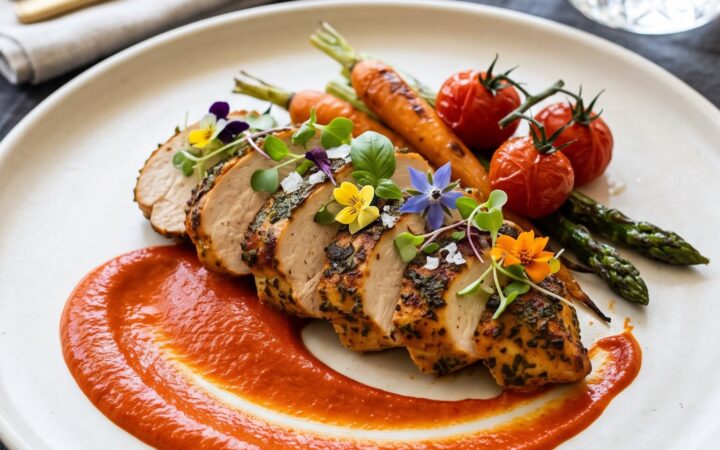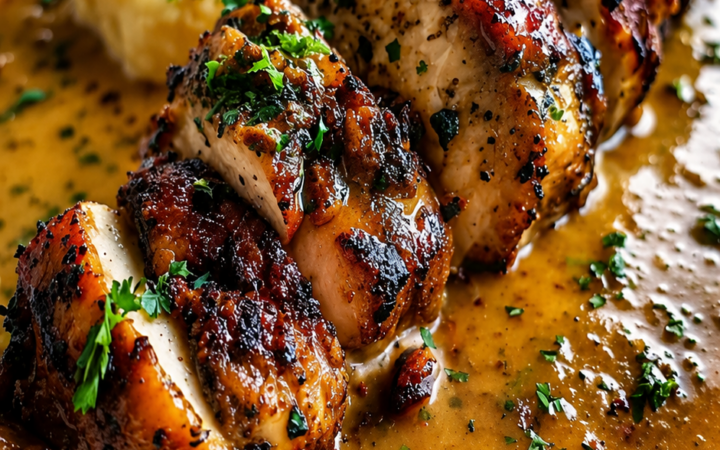
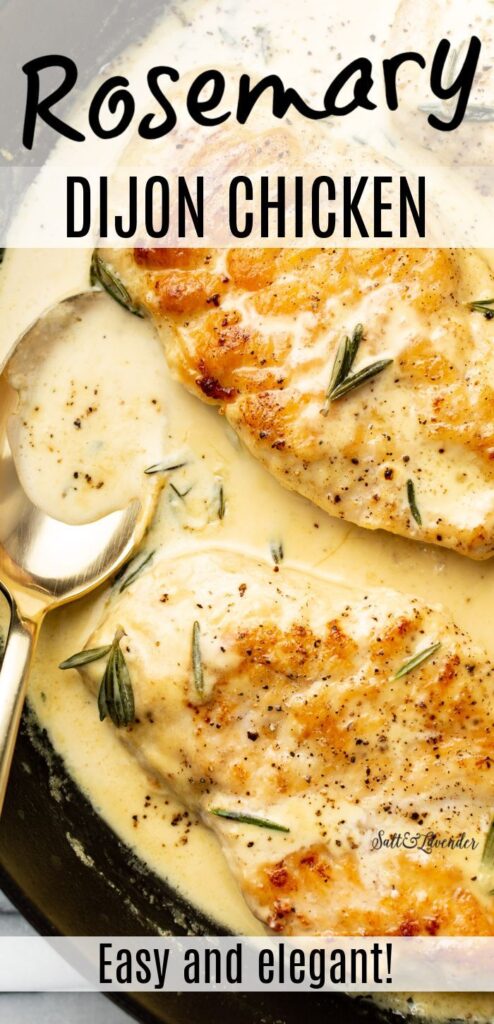
Rosemary Dijon chicken is a weeknight protein play with a favorable risk-to-reward ratio: six cutlets, one skillet, and a pan sauce built from the drippings you already paid for. The variables are few and controllable, which is exactly why it works.
Advertisements1
Most chicken breast failures trace to two inputs: uneven thickness and overcooking. We fix both. Pounding to a uniform 1/2 inch means every cutlet hits 165F (74C) at the same moment, and the flour dusting gives the fond that makes the sauce taste like it simmered for hours.
The Dijon does double duty here. Its acidity cuts the butterfat, and its emulsifiers keep the cream from breaking when the pan runs hot. Treat the mustard as a structural ingredient, not a garnish.
Why You'll Love This Recipe
About the Ingredients
6 boneless, skinless chicken breasts (about 2 lb / 900g), pounded to 1/2 inch
Buy breasts of similar size so they cook at the same rate; if yours are huge, halve them horizontally. Boneless thighs work as a substitute but need 4 to 6 extra minutes and reach 175F (79C).
1 1/2 tsp kosher salt
Kosher salt dissolves and seasons more evenly than table salt. If using fine table salt, cut the amount to 1 tsp or the sauce will taste flat and salty.
1 tsp freshly ground black pepper
Pre-ground pepper loses its volatile oils within weeks. Grind to order; a cheap burr grinder outperforms any pre-filled shaker.
1/3 cup (40g) all-purpose flour
Flour creates the crust that becomes fond, the flavor base of the sauce. For gluten-free, use 3 tbsp cornstarch, which browns faster, so shave 30 seconds off each sear.
3 tbsp olive oil, divided
Use regular olive oil, not extra-virgin, for the sear; EVOO's smoke point is lower and it will turn bitter. Avocado oil is a fine swap.
3 tbsp unsalted butter, divided
Unsalted lets you control total sodium. If you only have salted butter, drop the kosher salt above to 1 tsp.
4 cloves garlic, minced (about 1 tbsp)
Fresh garlic only here; jarred garlic is packed in acid and will scorch. Mince fine so it blooms in 30 seconds rather than burning.
1 1/2 cups (360ml) low-sodium chicken broth
Low-sodium is the point: you reduce this liquid by half, which concentrates whatever salt is in it. Vegetable broth makes it sweeter.
1/2 cup (120ml) heavy cream
Heavy cream at 36% fat resists curdling when it hits acid. Half-and-half will break; if dairy-free, use full-fat coconut milk and expect a coconut note.
3 tbsp Dijon mustard
Dijon, not yellow mustard; the former has wine and a sharper bite that survives reduction. Whole-grain mustard substitutes but leaves visible seeds.
1 1/2 tsp dried rosemary, crushed between your palms
Crushing releases the oils. Dried is more concentrated than fresh: if using fresh, triple it to 4 1/2 tsp and add it in the last 2 minutes.
1 tbsp fresh lemon juice
Added off heat to preserve brightness. Bottled lemon juice tastes metallic after reduction; a real lemon is worth the 30 seconds.
Tips & Tricks
Dry the Surface or Lose the Sear
Pat cutlets bone-dry with paper towels. Surface moisture steams instead of browning, and you lose the fond that carries the entire sauce.
Control Pan Temperature, Not the Clock
If butter browns in under 10 seconds, the pan is too hot; pull it off heat for 30 seconds. An infrared thermometer should read 350F (177C) at the start of each sear.
Reduce Before You Add Cream
The broth must coat a spoon before the cream goes in. Adding cream early means a thin sauce you cannot fix without overcooking the chicken.
Taste at the End, Not the Beginning
Salt perception changes after reduction. Season the finished sauce, not the raw broth, or you will overshoot.
Pro Tips
Step-by-Step Instructions
1. Pound and Season
Place each breast between two sheets of plastic wrap and pound to an even 1/2 inch with a flat mallet or heavy skillet. Season both sides with the kosher salt and black pepper, then let them sit at room temperature for 10 minutes so they cook evenly through.
2. Dredge in Flour
Spread the flour on a plate and press each cutlet into it, shaking off the excess so only a thin, even coat remains. A heavy coat will fall off in the pan and burn, turning your sauce bitter.
3. Sear the Chicken
Heat 2 tbsp olive oil and 1 tbsp butter in a large skillet over medium-high until shimmering and the butter foam subsides, about 350F (177C). Sear 3 cutlets at a time for 5 to 6 minutes per side until deep golden brown and the internal temperature reads 162F (72C). Transfer to a rack and repeat with the remaining oil and 1 tbsp butter.
4. Bloom the Garlic
Pour off all but 1 tbsp of fat, lower heat to medium, and add the garlic. Stir constantly for 30 seconds until fragrant but not colored; burnt garlic is unrecoverable and will dominate the sauce.
5. Build the Sauce Base
Pour in the chicken broth and scrape the browned bits off the bottom with a wooden spoon. Add the Dijon and crushed rosemary, bring to a simmer, and reduce for 6 to 8 minutes until the liquid coats the back of a spoon, roughly halved in volume.
6. Finish with Cream
Reduce heat to low and whisk in the heavy cream and remaining 1 tbsp butter. Simmer gently for 3 to 4 minutes until the sauce thickens enough to leave a clean trail when you drag a spoon through it; do not boil, or the emulsion will split.
7. Brighten and Serve
Remove from heat, stir in the lemon juice, and taste for salt. Return the chicken and any collected juices to the pan, spoon sauce over the top, and serve immediately with the sauce pooled alongside.
Delicious Variations
Mushroom Dijon
Add 8 oz sliced cremini mushrooms after the garlic and cook 5 minutes until browned before adding broth; the sauce gains an earthy depth that pairs with the rosemary.
White Wine Version
Replace 1/2 cup of the broth with dry white wine and reduce 2 minutes longer; the wine's acidity sharpens the Dijon but the alcohol must cook off fully.
Sheet-Pan Roasted
Toss 1 lb halved baby potatoes and 12 oz green beans with oil, roast at 425F (218C) for 25 minutes, then nestle seared chicken on top and broil 3 minutes.
How to Store Rosemary Dijon Chicken
Refrigerator
Store chicken and sauce together in an airtight container for up to 4 days. Keep the sauce covering the meat to prevent drying.
Freezer
Freeze in a sealed container for up to 3 months, but expect the cream sauce to separate slightly on thaw; whisk over low heat to re-emulsify.
Reheating
Reheat gently in a covered skillet over medium-low with 1 tbsp broth for 6 to 8 minutes until 165F (74C). A microwave works but toughens the crust.
Frequently Asked Questions
Q: Can I use chicken thighs instead of breasts?
Yes, boneless skinless thighs work and are harder to overcook, but they need 6 to 8 minutes per side and an internal temperature of 175F (79C). The higher fat content also makes the pan sauce richer, so you may want 1 tbsp less butter.
Q: Why did my Dijon cream sauce curdle?
The sauce curdled because the cream hit high heat or acid too fast, causing the fat to separate from the liquid. Prevent it by lowering the heat to low before adding cream, whisking constantly, and adding the lemon juice only after the pan is off the burner.
Q: How do I know when the chicken is done without a thermometer?
The safest indicator is an instant-read thermometer reading 162F (72C) before resting, since visual cues are unreliable. If you lack one, cut into the thickest part: the juices should run clear and the meat should be opaque white with no pink translucence.
Q: Can I make this rosemary Dijon chicken ahead of time?
You can sear the chicken and build the sauce up to 2 days ahead, then refrigerate them separately and reheat together. Hold off on the lemon juice until reheating, because its brightness fades and the acid can dull the sauce over time.
Q: Is Dijon mustard spicy or mild?
Dijon is moderately sharp, hotter than yellow mustard but far milder than horseradish, and its heat mellows significantly once cooked into a sauce. If you want less bite, use 2 tbsp Dijon plus 1 tbsp whole-grain mustard.
This recipe rewards measurement over intuition: a thermometer, a timer, and a tasting spoon will outperform any amount of guesswork. Cook it once as written, log what your pan and stove actually do, then adjust from a baseline instead of from scratch. Invest in your knowledge.
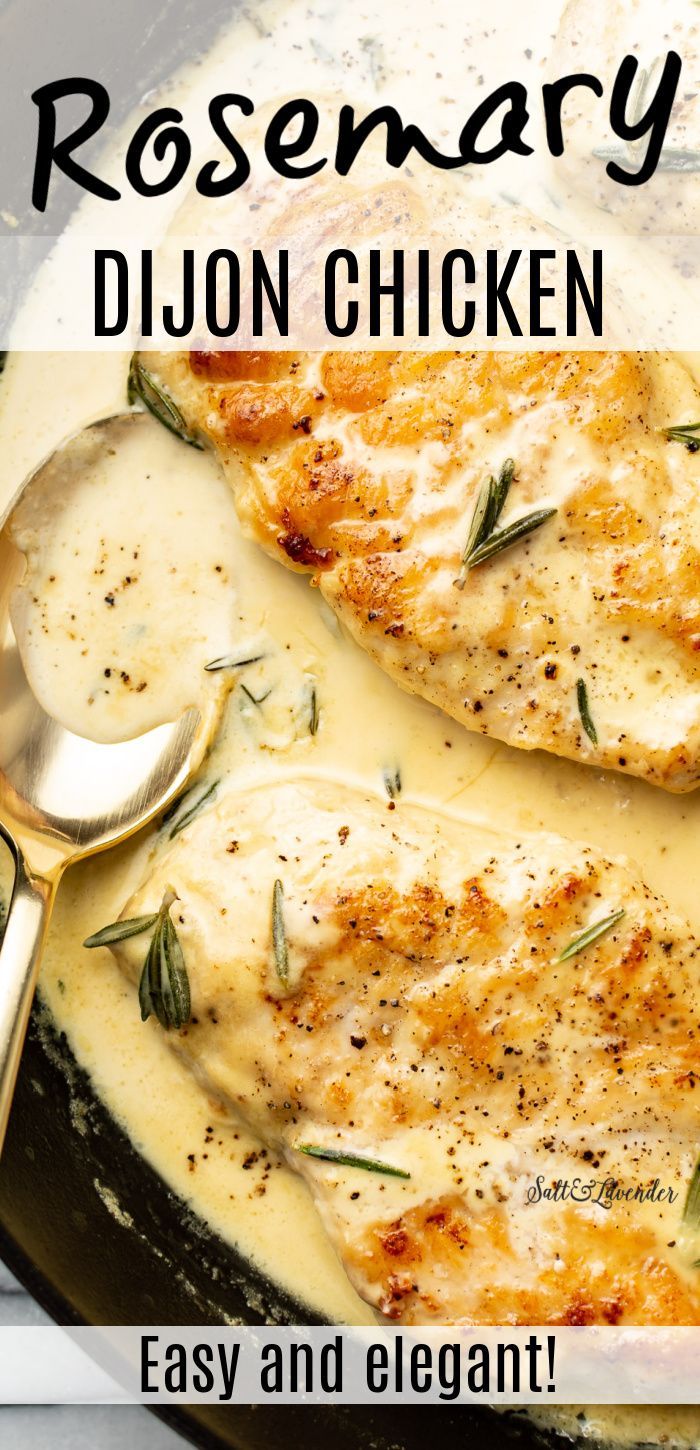
Rosemary Dijon Chicken
Rosemary Dijon chicken delivers juicy pan-seared cutlets in a tangy cream sauce with 12g protein per serving and one skillet to wash.
🧂 Ingredients
- 6 boneless, skinless chicken breasts (about 2 lb / 900g), pounded to 1/2 inch
- 1 1/2 tsp kosher salt
- 1 tsp freshly ground black pepper
- 1/3 cup (40g) all-purpose flour
- 3 tbsp olive oil, divided
- 3 tbsp unsalted butter, divided
- 4 cloves garlic, minced (about 1 tbsp)
- 1 1/2 cups (360ml) low-sodium chicken broth
- 1/2 cup (120ml) heavy cream
- 3 tbsp Dijon mustard
- 1 1/2 tsp dried rosemary, crushed between your palms
- 1 tbsp fresh lemon juice
📋 Instructions
- 1Pound and Season — Place each breast between two sheets of plastic wrap and pound to an even 1/2 inch with a flat mallet or heavy skillet. Season both sides with the kosher salt and black pepper, then let them sit at room temperature for 10 minutes so they cook evenly through.
- 2Dredge in Flour — Spread the flour on a plate and press each cutlet into it, shaking off the excess so only a thin, even coat remains. A heavy coat will fall off in the pan and burn, turning your sauce bitter.
- 3Sear the Chicken — Heat 2 tbsp olive oil and 1 tbsp butter in a large skillet over medium-high until shimmering and the butter foam subsides, about 350F (177C). Sear 3 cutlets at a time for 5 to 6 minutes per side until deep golden brown and the internal temperature reads 162F (72C). Transfer to a rack and repeat with the remaining oil and 1 tbsp butter.
- 4Bloom the Garlic — Pour off all but 1 tbsp of fat, lower heat to medium, and add the garlic. Stir constantly for 30 seconds until fragrant but not colored; burnt garlic is unrecoverable and will dominate the sauce.
- 5Build the Sauce Base — Pour in the chicken broth and scrape the browned bits off the bottom with a wooden spoon. Add the Dijon and crushed rosemary, bring to a simmer, and reduce for 6 to 8 minutes until the liquid coats the back of a spoon, roughly halved in volume.
- 6Finish with Cream — Reduce heat to low and whisk in the heavy cream and remaining 1 tbsp butter. Simmer gently for 3 to 4 minutes until the sauce thickens enough to leave a clean trail when you drag a spoon through it; do not boil, or the emulsion will split.
- 7Brighten and Serve — Remove from heat, stir in the lemon juice, and taste for salt. Return the chicken and any collected juices to the pan, spoon sauce over the top, and serve immediately with the sauce pooled alongside.

Marcus writes about personal finance and investing, with a focus on helping young professionals build wealth from scratch. He breaks down complex concepts into simple, actionable strategies.