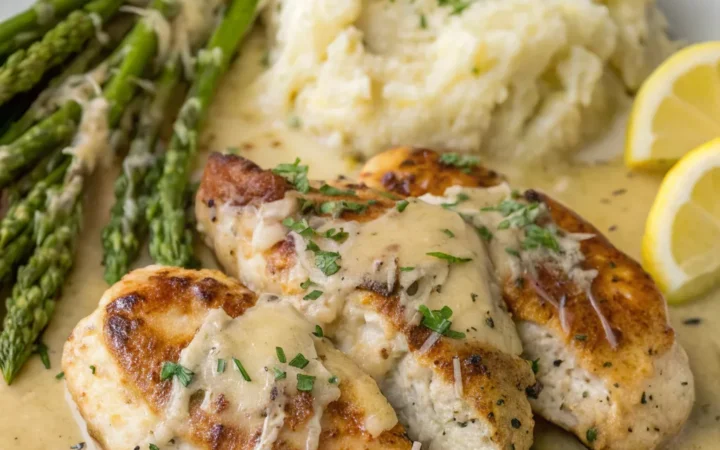
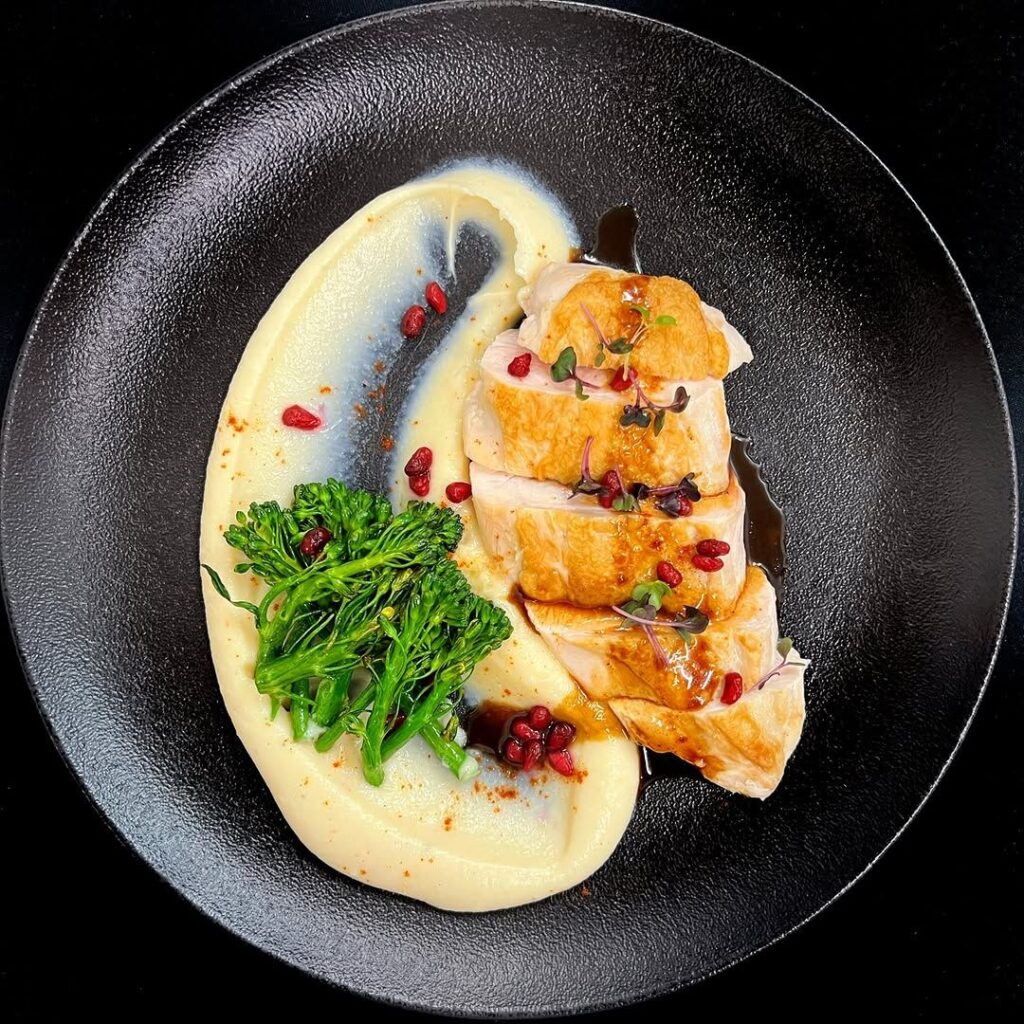
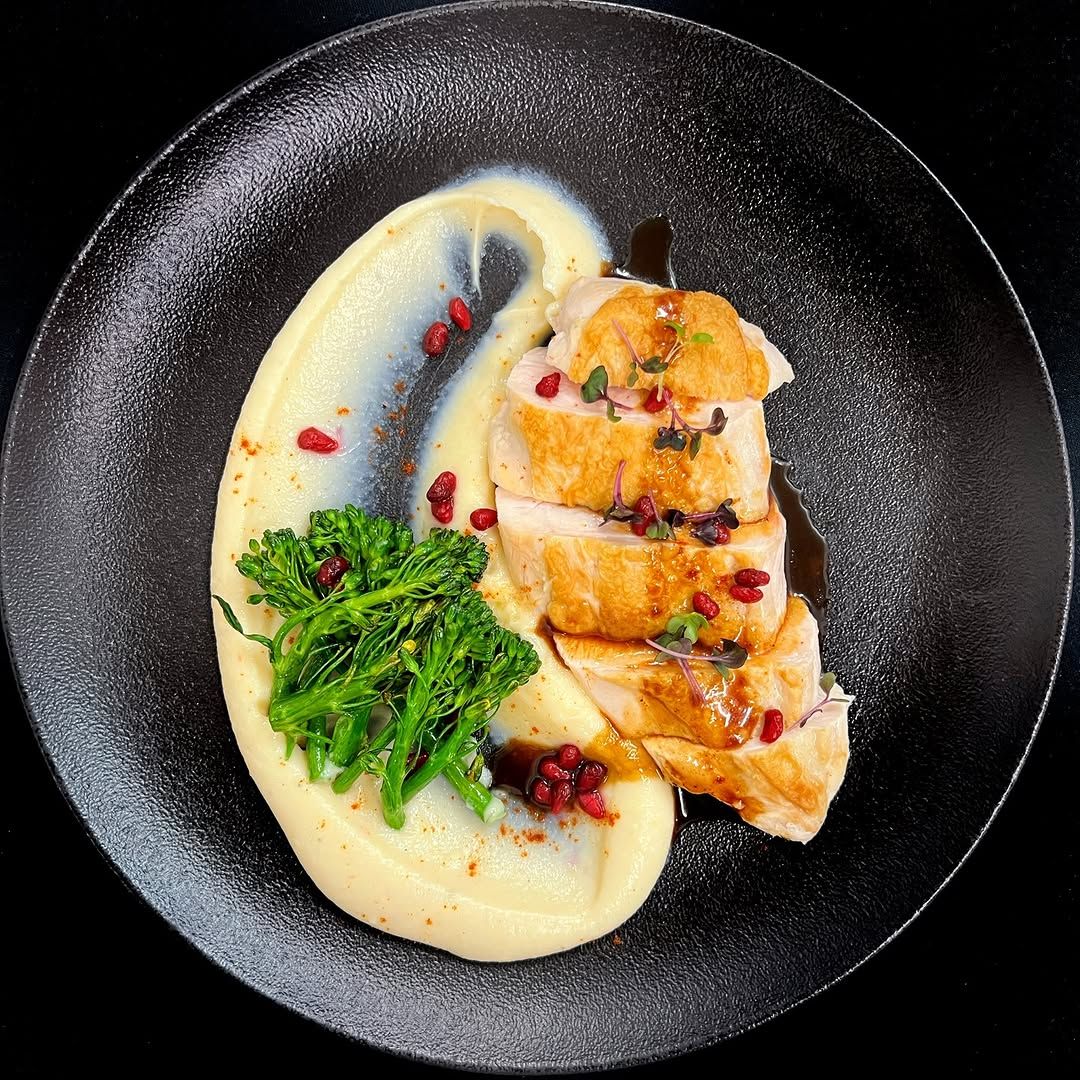
The first time I served this plate, my youngest leaned over the table and whispered, "Is this a restaurant?" I laughed, because honestly, the plate looked like one: a swoosh of pale, silky cauliflower, a chicken breast with a crackly bronze crust, and broccolini glistening with garlic. But the truth is I built it from a Tuesday-night panic, three lonely heads of cauliflower and a package of chicken I had forgotten to thaw properly.
Advertisements1
Here is what I love about this dish: it teaches you two techniques that quietly change how you cook forever. Reverse searing gives you chicken that is juicy at the bone and burnished on the surface, and simmering cauliflower in milk instead of water gives you a purée that tastes like velvet, not like diet food. Neither one is hard. Both just ask you to pay attention.
Maybe you are cooking for a family who eyes cauliflower with suspicion, or maybe you are cooking for one and want something that feels like care. Either way, this plate meets you where you are. Shall we cook it together?
Why You'll Love This Recipe
About the Ingredients
2 large heads cauliflower (about 2 1/2 lb / 1.1 kg), cut into florets
Look for heads that feel heavy and have tight, unspotted curds; brown speckles mean age. Frozen florets work in a pinch, but steam them first and drain very well so the purée does not turn watery.
1 1/2 cups (360 ml) whole milk
Whole milk gives the richest body; swap in unsweetened oat milk or chicken stock if you are dairy-free, though the purée will be slightly less silky. Do not use skim milk here, it turns grainy.
4 tbsp (56 g) unsalted butter, divided
European-style butter has a higher fat content and a cleaner finish, which matters in a simple purée. Salted butter works, just reduce the added salt by a pinch.
2 tsp lime zest plus 3 tbsp (45 ml) fresh lime juice, from about 2 limes
Zest before juicing, always, and roll the limes on the counter first to release more juice. Bottled lime juice is a last resort; it tastes flat and slightly metallic.
4 boneless, skinless chicken breasts (about 6 oz / 170 g each), patted very dry
Air-chilled chicken browns better because it holds less added water. If your breasts are huge, slice them horizontally into cutlets so they cook evenly.
2 tsp kosher salt, plus more to taste
Diamond Crystal kosher salt is less dense than Morton, so if you use table salt, start with half and taste. Seasoning the chicken 30 minutes ahead lets the salt penetrate.
1 tsp freshly cracked black pepper
Crack it right before using; pre-ground pepper loses its oils fast. A coarse grind gives you little bursts of heat rather than a dusty blanket.
2 bunches broccolini (about 1 lb / 450 g), trimmed
Regular broccoli cut into slim spears is a fine substitute, just add 3 minutes to the roast time. Choose broccolini with tight green buds and firm, snap-able stems.
4 garlic cloves, thinly sliced
Fresh garlic only here; the jarred stuff burns and turns bitter. Slice rather than mince so the slivers toast instead of scorching.
3 tbsp (45 ml) olive oil
Regular olive oil is perfect for roasting; save the expensive finishing oil for drizzling at the end. Avocado oil is a great high-heat swap.
1/4 tsp freshly grated nutmeg
A tiny amount wakes up the cauliflower without announcing itself. Whole nutmeg grated on a microplane is dramatically better than the pre-ground jar.
Tips & Tricks
Dry the chicken like you mean it
Moisture is the enemy of a golden crust. Pat the breasts with paper towels, then let them sit uncovered in the fridge for 20 minutes while the oven heats.
Drain the cauliflower thoroughly
After simmering, let the florets steam-dry in the colander for 5 minutes before blending, or the purée will turn soupy and dull.
Zest before you juice
Once a lime is cut, zesting becomes a slippery, frustrating job. Do it in the right order and you will thank yourself.
Taste the purée warm, not hot
Season, then taste once it has cooled a few degrees; very hot purée reads as less salty than it actually is.
Pro Tips
Step-by-Step Instructions
1. Heat the oven and season
Heat the oven to 325°F (165°C). Pat the chicken breasts completely dry, then season both sides with the kosher salt and cracked pepper. Let them sit at room temperature while the oven comes to temperature.
2. Roast the chicken gently
Place the chicken on a rimmed sheet pan and roast at 325°F (165°C) for 18 to 22 minutes, until a thermometer inserted into the thickest part reads 150°F (66°C). The surface will look pale and matte here, which is exactly right.
3. Simmer the cauliflower
While the chicken roasts, combine the cauliflower, milk, 2 tablespoons of the butter, and the nutmeg in a large saucepan. Bring to a gentle simmer over medium heat, then cover and cook for 15 to 18 minutes, until a knife slides through a floret with no resistance, about 200°F (93°C) at a low bubble.
4. Roast the broccolini
Raise the oven to 425°F (220°C). Toss the broccolini with the olive oil, sliced garlic, and a pinch of salt on a second sheet pan. Roast for 10 to 12 minutes, until the stems are tender and the tips are crisping at the edges, with garlic slivers turning pale gold.
5. Blend the purée
Drain the cauliflower, reserving 1/2 cup (120 ml) of the cooking milk. Blend the florets with the remaining 2 tablespoons butter, the lime zest, lime juice, and 1/4 cup (60 ml) of the reserved milk until completely smooth, about 60 seconds. Add more milk a tablespoon at a time until it falls slowly off a spoon.
6. Sear the chicken hard
Heat a cast-iron skillet over medium-high until a drop of water evaporates on contact, about 400°F (205°C). Add the roasted chicken and sear for 90 seconds per side, until deeply golden brown and the internal temperature reaches 160°F (71°C).
7. Rest and slice
Move the chicken to a cutting board and rest for 8 minutes. Slice against the grain into 1/2-inch (1.3 cm) pieces; the interior should be opaque white with clear juices, never pink.
8. Plate and serve
Spoon a generous swoosh of lime cauliflower purée onto each plate, fan the sliced chicken over it, and pile the garlic broccolini alongside. Spoon any resting juices over the chicken and finish with a final pinch of salt.
Delicious Variations
Lemon-Herb Version
Swap the lime zest and juice for lemon and stir 2 tablespoons of chopped fresh tarragon into the purée for a softer, anise-scented plate.
Crispy-Skin Thighs
Use 6 bone-in, skin-on thighs instead, roast at 325°F (165°C) for 30 minutes, then sear skin-side down for 3 minutes until shatteringly crisp.
Spiced Cauliflower Purée
Bloom 1 teaspoon of ground cumin and 1/2 teaspoon of smoked paprika in the butter before adding the cauliflower for a warm, smoky base that pairs beautifully with the lime.
How to Store Gourmet Plate: Lime Cauliflower Purée, Reverse-Seared Chicken & Garlic Broccolini
Refrigerator
Store the purée, chicken, and broccolini in separate airtight containers for up to 4 days. Keep the chicken in its juices so it stays moist.
Freezer
Freeze the purée alone for up to 2 months in a freezer bag pressed flat; thaw overnight in the refrigerator. The chicken and broccolini do not freeze well and will lose their texture.
Reheating
Warm the purée in a saucepan over low heat with a splash of milk, stirring constantly. Reheat the chicken gently in a 300°F (150°C) oven for 8 minutes, and refresh the broccolini in a hot skillet for 2 minutes.
Frequently Asked Questions
Q: Can I make lime cauliflower purée without a blender?
Yes, a food processor works, and even a potato masher will get you there with a slightly rustic texture. Blend in batches and never fill the processor more than halfway, since hot liquid expands and can overflow.
Q: What temperature should chicken be cooked to for reverse searing?
Pull the chicken from the oven at 150°F (66°C) and finish it in the skillet until it reaches 160°F (71°C), then rest it for 8 minutes. The temperature will coast up to a safe 165°F (74°C) during resting, and the meat stays juicy instead of chalky.
Q: Why is my cauliflower purée watery?
Almost always because the florets were not drained well or too much cooking milk went back in. Let the cauliflower steam-dry in the colander for 5 minutes, then add the reserved milk one tablespoon at a time until you hit the texture you want.
Q: Can I use frozen cauliflower for this recipe?
You can, but steam it first and squeeze it dry in a clean towel, because frozen cauliflower releases a lot of water. Expect a slightly looser purée, so reduce the added milk by half.
Q: Is this dish gluten-free and low carb?
Yes, it is naturally gluten-free and clocks in around 22 grams of carbs per serving, most of it from the cauliflower and milk. If you are watching carbs closely, use unsweetened almond milk and skip the butter finish.
I would love to know how this plate lands at your table. Did the purée convert a cauliflower skeptic in your house, or did you swap in something entirely your own? Tell me in the comments, and if you make it, snap a photo and tag me so I can cheer you on. Nurture with intention.
Gourmet Plate: Lime Cauliflower Purée, Reverse-Seared Chicken & Garlic Broccolini
Lime Cauliflower Purée with Reverse-Seared Chicken and Garlic Broccolini: a creamy, restaurant-worthy plate you can pull off on a weeknight.
🧂 Ingredients
- 2 large heads cauliflower (about 2 1/2 lb / 1.1 kg), cut into florets
- 1 1/2 cups (360 ml) whole milk
- 4 tbsp (56 g) unsalted butter, divided
- 2 tsp lime zest plus 3 tbsp (45 ml) fresh lime juice, from about 2 limes
- 4 boneless, skinless chicken breasts (about 6 oz / 170 g each), patted very dry
- 2 tsp kosher salt, plus more to taste
- 1 tsp freshly cracked black pepper
- 2 bunches broccolini (about 1 lb / 450 g), trimmed
- 4 garlic cloves, thinly sliced
- 3 tbsp (45 ml) olive oil
- 1/4 tsp freshly grated nutmeg
📋 Instructions
- 1Heat the oven and season — Heat the oven to 325°F (165°C). Pat the chicken breasts completely dry, then season both sides with the kosher salt and cracked pepper. Let them sit at room temperature while the oven comes to temperature.
- 2Roast the chicken gently — Place the chicken on a rimmed sheet pan and roast at 325°F (165°C) for 18 to 22 minutes, until a thermometer inserted into the thickest part reads 150°F (66°C). The surface will look pale and matte here, which is exactly right.
- 3Simmer the cauliflower — While the chicken roasts, combine the cauliflower, milk, 2 tablespoons of the butter, and the nutmeg in a large saucepan. Bring to a gentle simmer over medium heat, then cover and cook for 15 to 18 minutes, until a knife slides through a floret with no resistance, about 200°F (93°C) at a low bubble.
- 4Roast the broccolini — Raise the oven to 425°F (220°C). Toss the broccolini with the olive oil, sliced garlic, and a pinch of salt on a second sheet pan. Roast for 10 to 12 minutes, until the stems are tender and the tips are crisping at the edges, with garlic slivers turning pale gold.
- 5Blend the purée — Drain the cauliflower, reserving 1/2 cup (120 ml) of the cooking milk. Blend the florets with the remaining 2 tablespoons butter, the lime zest, lime juice, and 1/4 cup (60 ml) of the reserved milk until completely smooth, about 60 seconds. Add more milk a tablespoon at a time until it falls slowly off a spoon.
- 6Sear the chicken hard — Heat a cast-iron skillet over medium-high until a drop of water evaporates on contact, about 400°F (205°C). Add the roasted chicken and sear for 90 seconds per side, until deeply golden brown and the internal temperature reaches 160°F (71°C).
- 7Rest and slice — Move the chicken to a cutting board and rest for 8 minutes. Slice against the grain into 1/2-inch (1.3 cm) pieces; the interior should be opaque white with clear juices, never pink.
- 8Plate and serve — Spoon a generous swoosh of lime cauliflower purée onto each plate, fan the sliced chicken over it, and pile the garlic broccolini alongside. Spoon any resting juices over the chicken and finish with a final pinch of salt.

Aisha writes about parenting and child development, emphasizing mindful and gentle approaches. She shares observations and strategies for fostering emotional intelligence and resilience in kids.