

There is a particular kind of magic that happens when honey meets barbecue sauce in a hot oven. The sugars caramelize, the edges turn lacquered and glossy, and suddenly the humble chicken tender becomes the thing everyone reaches for first. I remember the first time I made these for my niece's birthday table, and a nine-year-old looked up at me with sauce on her chin and asked, 'Can you make these every day?' That question has stayed with me ever since.
Advertisements1
Chicken tenders are the tenderloin muscle tucked beneath the breast, and they are naturally small, quick-cooking, and forgiving. That makes them perfect for a weeknight when you want something that feels like a treat but does not demand a deep fryer or a mountain of dishes. The honey BBQ glaze does double duty here: it seasons the chicken before it bakes and thickens into a sticky coating as it roasts.
Maybe you are cooking for picky eaters, or maybe you are cooking for yourself on a quiet Tuesday. Either way, this recipe meets you where you are. It is sweet enough for kids, smoky enough for adults, and simple enough that you can make it while unpacking backpacks and answering texts. Let's make something warm together.
Why You'll Love This Recipe
About the Ingredients
2 pounds (900g) chicken tenders, patted dry
Chicken tenders are the tenderloin under the breast. If you cannot find them, slice boneless skinless breasts into 1-inch strips, or use boneless thighs for juicier meat.
1 cup (240ml) barbecue sauce, plus 2 tablespoons for serving
Use a tomato-based sauce you already like. A smoky or hickory variety works best. If your sauce is very sweet, reduce the honey to 2 tablespoons.
1/3 cup (80ml) honey
Clover or wildflower honey keeps the flavor mild. If your honey is crystallized, warm the jar in a bowl of hot water for 5 minutes before measuring.
2 tablespoons soy sauce or tamari
Soy sauce adds salt and umami. Tamari is a great gluten-free swap, and coconut aminos work if you are avoiding soy entirely.
1 tablespoon apple cider vinegar
The acid cuts through the sweetness. White vinegar or fresh lemon juice can stand in if that is what you have.
1 teaspoon smoked paprika
Smoked paprika gives that backyard-grill depth. Sweet paprika works in a pinch, but you will lose some smokiness.
1 teaspoon garlic powder
Granulated garlic blends into the glaze better than fresh. Onion powder can substitute if you are out.
1/2 teaspoon kosher salt
Kosher salt seasons gently. If using fine table salt, start with 1/4 teaspoon and taste the glaze.
1/2 teaspoon freshly cracked black pepper
Freshly cracked pepper is brighter than pre-ground. A pinch of cayenne adds heat if you like a little kick.
1 tablespoon olive oil or avocado oil
Oil keeps the tenders from sticking and helps them brown. Avocado oil has a higher smoke point for a hotter oven.
1 tablespoon cornstarch
Cornstarch helps the glaze cling and thicken. Arrowroot powder is a one-to-one substitute.
2 scallions, thinly sliced, for garnish (optional)
Scallions add a fresh finish. Toasted sesame seeds or chopped cilantro work just as well.
Tips & Tricks
Pat the Tenders Very Dry
Moisture is the enemy of browning. Blot each tender with paper towels before it touches the glaze so the sauce caramelizes instead of steaming.
Watch the Sugar at the End
Honey burns quickly above 425F (220C). If the glaze starts darkening too fast, tent the pan loosely with foil and lower the heat by 25F (15C).
Let Them Rest Before Serving
Five minutes off the heat lets the glaze set and the juices redistribute, so the coating stays on the chicken instead of sliding off.
Make Extra Glaze on the Side
Reserved sauce for dipping keeps the tenders from getting soggy and lets everyone control their own sweetness level.
Pro Tips
Step-by-Step Instructions
1. Heat the Oven
Preheat your oven to 425F (220C) and line a rimmed sheet pan with parchment or foil. If you have a wire rack, set it inside the pan so the tenders crisp on all sides.
2. Dry the Chicken
Pat the 2 pounds (900g) of chicken tenders completely dry with paper towels. This step matters more than people expect, because a dry surface is what allows the glaze to caramelize rather than steam.
3. Whisk the Glaze
In a medium bowl, whisk together 1 cup (240ml) barbecue sauce, 1/3 cup (80ml) honey, 2 tablespoons soy sauce, 1 tablespoon apple cider vinegar, 1 teaspoon smoked paprika, 1 teaspoon garlic powder, 1/2 teaspoon salt, 1/2 teaspoon black pepper, and 1 tablespoon cornstarch until smooth. Reserve 1/3 cup of the glaze in a small bowl for serving.
4. Coat the Tenders
Add the tenders to the large bowl of glaze and toss until every piece is coated. Let them sit for 10 minutes while the oven finishes heating, which gives the sauce time to cling and penetrate.
5. Arrange and Bake
Arrange the tenders in a single layer on the prepared pan, spacing them at least 1/2 inch apart. Bake at 425F (220C) for 12 minutes, then flip each tender with tongs.
6. Glaze and Finish
Brush the tenders with the remaining glaze from the large bowl and bake another 6 to 8 minutes, until the coating is bubbling at the edges and deeply golden brown. The chicken should reach 165F (74C) on an instant-read thermometer.
7. Rest and Garnish
Let the tenders rest on the pan for 5 minutes so the glaze sets. Transfer to a platter, scatter with sliced scallions, and serve with the reserved glaze for dipping.
Delicious Variations
Spicy Honey Sriracha
Swap half the BBQ sauce for sriracha and add 1 teaspoon of red pepper flakes for a sweet-heat version that adults love.
Air Fryer Honey BBQ
Cook at 400F (200C) for 10 minutes, flip, brush with glaze, and cook 4 more minutes for a faster, crispier result.
Pineapple Honey BBQ
Add 1/2 cup of drained crushed pineapple to the glaze and bake as directed for a tropical twist that pairs beautifully with rice.
How to Store Honey BBQ Chicken Tenders
Refrigerator
Store cooled tenders in an airtight container in the refrigerator for up to 4 days. Keep the reserved glaze separate so the coating does not get soggy.
Freezer
Freeze cooked tenders in a single layer on a sheet pan for 1 hour, then transfer to a freezer bag for up to 3 months. Freeze the glaze separately in a small container.
Reheating
Reheat in a 350F (175C) oven for 8 to 10 minutes, or in an air fryer at 350F (175C) for 4 to 5 minutes. Avoid the microwave if you want the glaze to stay sticky rather than steaming.
Frequently Asked Questions
Q: Can I use chicken breasts instead of tenders?
Yes, slice boneless skinless breasts into 1-inch strips and cook them the same way, though you may need 2 to 3 extra minutes since the pieces are thicker. Check for 165F (74C) internal temperature before serving.
Q: Why did my honey BBQ sauce burn?
Honey and barbecue sauce both contain sugars that scorch above 425F (220C), so staying at or below that temperature and glazing in two stages prevents burning. If the edges darken too quickly, tent the pan with foil and reduce the heat by 25F (15C).
Q: Can I marinate the chicken overnight?
You can, and the flavor will be deeper, but keep the marinade to 12 hours maximum because the vinegar and salt will start to change the texture of the meat. If marinating longer, use only half the glaze and add the rest before baking.
Q: How do I know when chicken tenders are done?
The safest test is an instant-read thermometer reading 165F (74C) in the thickest part of the tender. Visually, the glaze should be bubbling and the meat opaque with no pink at the center.
Q: Can I make these gluten-free?
Yes, use tamari or coconut aminos instead of soy sauce and choose a barbecue sauce labeled gluten-free, since many brands contain wheat-based thickeners. Cornstarch is naturally gluten-free, so no other swaps are needed.
I hope these honey BBQ chicken tenders become the recipe your people ask for by name, the way my niece still does. If you make them, I would love to know whether you went smoky, spicy, or somewhere in between. What is the one dish that always brings your family to the table? Nurture with intention.
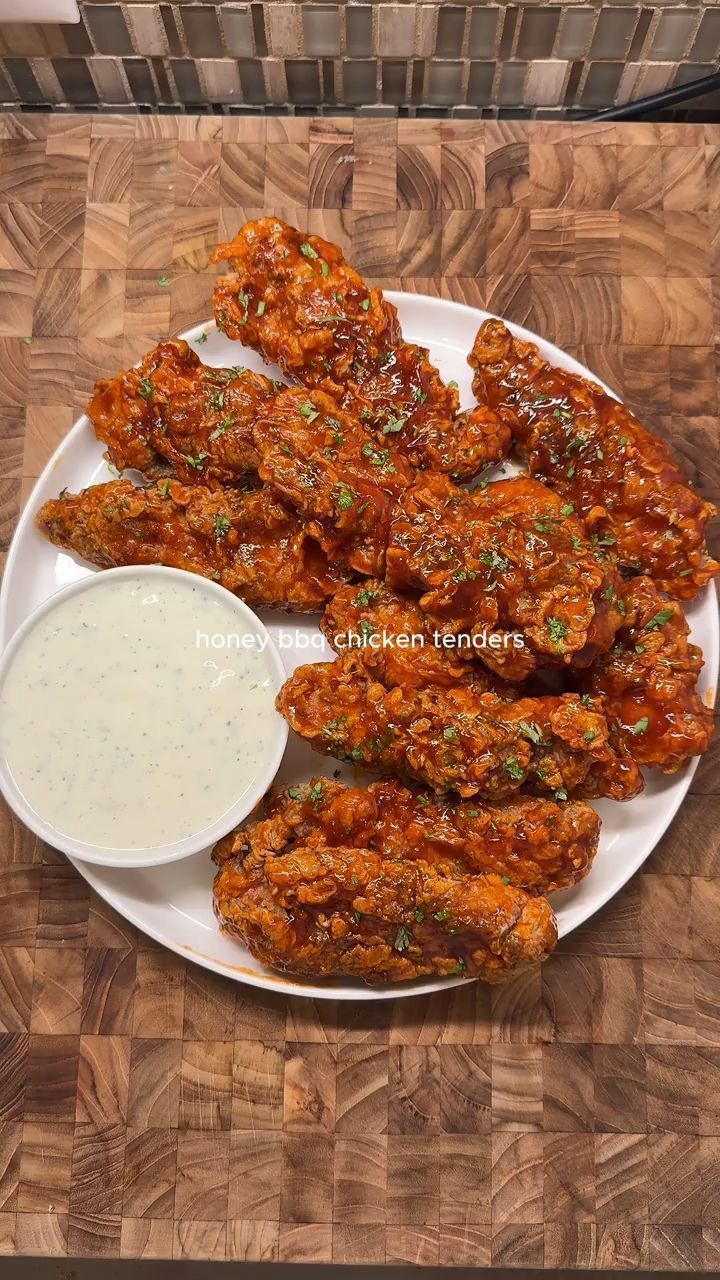
Honey BBQ Chicken Tenders
Honey BBQ Chicken Tenders bake up sticky-sweet and crispy in one pan, a 50-minute dinner your whole family will fight over.
🧂 Ingredients
- 2 pounds (900g) chicken tenders, patted dry
- 1 cup (240ml) barbecue sauce, plus 2 tablespoons for serving
- 1/3 cup (80ml) honey
- 2 tablespoons soy sauce or tamari
- 1 tablespoon apple cider vinegar
- 1 teaspoon smoked paprika
- 1 teaspoon garlic powder
- 1/2 teaspoon kosher salt
- 1/2 teaspoon freshly cracked black pepper
- 1 tablespoon olive oil or avocado oil
- 1 tablespoon cornstarch
- 2 scallions, thinly sliced, for garnish (optional)
📋 Instructions
- 1Heat the Oven — Preheat your oven to 425F (220C) and line a rimmed sheet pan with parchment or foil. If you have a wire rack, set it inside the pan so the tenders crisp on all sides.
- 2Dry the Chicken — Pat the 2 pounds (900g) of chicken tenders completely dry with paper towels. This step matters more than people expect, because a dry surface is what allows the glaze to caramelize rather than steam.
- 3Whisk the Glaze — In a medium bowl, whisk together 1 cup (240ml) barbecue sauce, 1/3 cup (80ml) honey, 2 tablespoons soy sauce, 1 tablespoon apple cider vinegar, 1 teaspoon smoked paprika, 1 teaspoon garlic powder, 1/2 teaspoon salt, 1/2 teaspoon black pepper, and 1 tablespoon cornstarch until smooth. Reserve 1/3 cup of the glaze in a small bowl for serving.
- 4Coat the Tenders — Add the tenders to the large bowl of glaze and toss until every piece is coated. Let them sit for 10 minutes while the oven finishes heating, which gives the sauce time to cling and penetrate.
- 5Arrange and Bake — Arrange the tenders in a single layer on the prepared pan, spacing them at least 1/2 inch apart. Bake at 425F (220C) for 12 minutes, then flip each tender with tongs.
- 6Glaze and Finish — Brush the tenders with the remaining glaze from the large bowl and bake another 6 to 8 minutes, until the coating is bubbling at the edges and deeply golden brown. The chicken should reach 165F (74C) on an instant-read thermometer.
- 7Rest and Garnish — Let the tenders rest on the pan for 5 minutes so the glaze sets. Transfer to a platter, scatter with sliced scallions, and serve with the reserved glaze for dipping.

Aisha writes about parenting and child development, emphasizing mindful and gentle approaches. She shares observations and strategies for fostering emotional intelligence and resilience in kids.