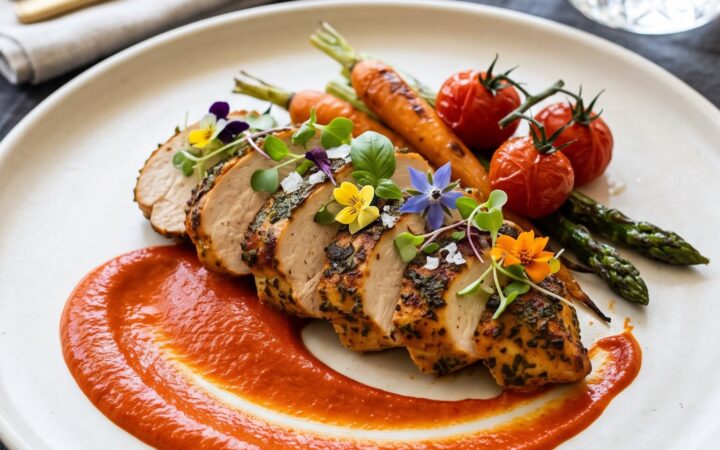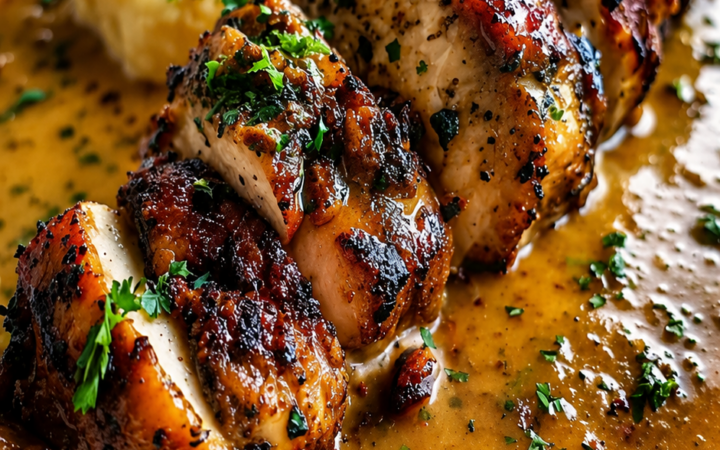
Most chicken breast failures trace back to two variables: internal temperature and resting time. Cook past 165F (74C) and the muscle fibers contract, squeezing out moisture at a rate you can measure on a scale. This recipe controls both variables, and the result is a chicken breast that reads 160F (71C) at the center before it carries over to a safe, juicy 165F (74C) during the rest.
Advertisements1
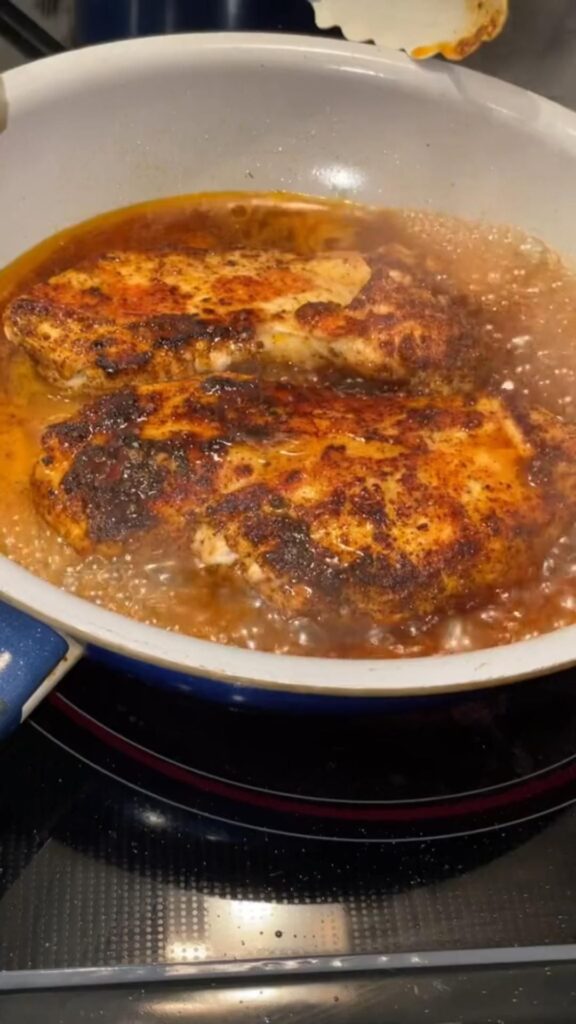
The second variable is surface moisture. A wet chicken breast steams instead of sears, and steam produces pale, rubbery skin. Patting the meat dry and using a screaming-hot cast iron skillet gets you a Maillard crust in 5 to 6 minutes per side, which is where the flavor actually lives.
Think of it like compound interest: small, consistent inputs (dry surface, correct heat, 5-minute rest) produce an outsized return. Skip one and the whole yield collapses. Follow all three and you get restaurant-grade chicken from a 12-inch pan.
Why You'll Love This Recipe
About the Ingredients
6 boneless, skinless chicken breasts (about 6 oz / 170g each)
Buy air-chilled breasts if available; they retain less added water and sear better. Substitute 6 boneless thighs, but reduce the sear to 4 minutes per side since thighs are thinner.
2 tsp kosher salt
Kosher salt dissolves slower and seasons more evenly than table salt. If using fine table salt, cut the amount to 1 1/4 tsp to avoid oversalting.
1 tsp freshly ground black pepper
Pre-ground pepper loses volatile oils within weeks. Grind whole peppercorns at the moment of cooking for a sharper bite.
2 tbsp olive oil
Use regular (not extra-virgin) olive oil for the sear; it has a higher smoke point near 410F (210C). Avocado oil works as a substitute at 520F (271C).
3 tbsp unsalted butter
Unsalted lets you control the total sodium since the chicken is already salted. Substitute ghee if you want a nuttier flavor and a higher smoke point.
4 cloves garlic, minced (about 1 tbsp)
Fresh garlic beats jarred paste by a wide margin in aroma. If using jarred, add it off the heat to prevent it burning in the butter.
1/2 cup (120ml) low-sodium chicken broth
Low-sodium broth lets you reduce the sauce without it turning salty. Substitute dry white wine for a brighter, more acidic pan sauce.
1 tbsp fresh lemon juice (about 1/2 lemon)
Bottled lemon juice tastes flat because it lacks the oils from the peel. Zest the lemon first and add the zest with the juice for more lift.
1 tbsp fresh parsley, chopped
Flat-leaf parsley has more flavor than curly. Substitute fresh thyme or tarragon if you want an herbal, slightly anise note.
Tips & Tricks
Dry the Surface Completely
Moisture on the chicken creates steam, not sear. Pat each breast with paper towels and let them sit uncovered for 10 minutes before cooking.
Do Not Crowd the Pan
Six breasts in a 12-inch skillet will steam each other. Sear in two batches of three, or use two skillets, and keep the first batch warm at 200F (93C).
Pull Early and Rest
Carryover cooking raises the internal temperature 5F (3C) during rest. Pull at 160F (71C), tent loosely, and wait 5 minutes before slicing.
Deglaze While Hot
The browned bits (fond) are concentrated flavor. Add the broth while the pan is still hot so it lifts the fond into the sauce instead of burning.
Pro Tips
Step-by-Step Instructions
1. Prep and Dry the Chicken
Pat the 6 chicken breasts completely dry with paper towels, then season both sides with the kosher salt and black pepper. Let them sit at room temperature for 15 minutes so they cook evenly from edge to center.
2. Heat the Skillet
Place a 12-inch cast iron or heavy stainless skillet over medium-high heat for 3 to 4 minutes. Add the olive oil; it is ready when it shimmers and a drop of water flicked in sizzles instantly, roughly 400F (204C).
3. Sear the First Batch
Lay 3 breasts in the pan without touching and cook undisturbed for 5 to 6 minutes until the underside is deep golden brown and releases easily. Flip and cook 5 to 6 minutes more, until the center reads 160F (71C) on an instant-read thermometer. Transfer to a plate and repeat with the remaining 3 breasts.
4. Build the Pan Sauce
Reduce the heat to medium and add the butter and minced garlic to the same pan. Cook 30 to 45 seconds, stirring constantly, until the garlic is fragrant and pale gold but not brown, which would taste bitter.
5. Deglaze and Reduce
Pour in the chicken broth and scrape the browned bits from the bottom with a wooden spoon. Simmer 3 to 4 minutes until the liquid reduces by about half and coats the back of the spoon.
6. Finish the Sauce
Remove the pan from the heat and stir in the lemon juice and chopped parsley. Taste and adjust salt; the sauce should be glossy and slightly tart, not flat.
7. Rest the Chicken
Return the chicken and any accumulated juices to the pan and let it rest 5 minutes off the heat. The internal temperature will carry over to 165F (74C), the safe serving threshold.
8. Slice and Serve
Slice the breasts against the grain into 1/2-inch (1.25cm) pieces and spoon the pan sauce over the top. Serve immediately over rice, potatoes, or greens.
Delicious Variations
Lemon-Herb Version
Swap the chicken broth for dry white wine and add 1 tsp lemon zest and 1 tsp fresh thyme with the parsley.
Spicy Honey-Garlic Version
Add 1 tbsp honey and 1/2 tsp red pepper flakes with the broth for a sweet-heat glaze that caramelizes in the pan.
Creamy Mushroom Version
Saute 8 oz (225g) sliced cremini mushrooms after the chicken, then add 1/4 cup (60ml) heavy cream with the broth and reduce 5 minutes.
How to Store Delicious Juicy Chicken Recipe!!🤤🤤🤤🙌🏽🙌🏽
Refrigerator
Store cooled chicken and sauce in an airtight container for up to 4 days. Keep the chicken submerged in sauce to prevent it drying out.
Freezer
Freeze portions in freezer-safe bags with the sauce for up to 3 months. Press out excess air to prevent freezer burn.
Reheating
Reheat gently in a covered skillet over low heat with 1 tbsp water or broth for 5 to 7 minutes, or microwave in 30-second intervals until it reaches 165F (74C). High heat will toughen the meat.
Frequently Asked Questions
Q: How do I know when chicken breast is fully cooked?
Chicken is safe at an internal temperature of 165F (74C) measured at the thickest part. Pull it from the pan at 160F (71C) and let it rest 5 minutes; carryover cooking finishes the job while keeping the meat juicy.
Q: Why is my chicken breast dry and rubbery?
Overcooking is the cause in nearly every case, because muscle fibers contract and squeeze out moisture past 165F (74C). Use an instant-read thermometer, pull early, and rest the meat before slicing.
Q: Can I use chicken thighs instead of breasts?
Yes, boneless skinless thighs work well and are harder to overcook due to their higher fat content. Sear them 4 to 5 minutes per side and cook to the same 165F (74C) internal temperature.
Q: Should I marinate the chicken before cooking?
A 30-minute dry brine with salt does more for flavor and texture than a wet marinade, because salt penetrates the muscle and seasons it throughout. Wet marinades mostly flavor the surface and add moisture that blocks searing.
Q: How long does leftover cooked chicken last?
Cooked chicken keeps 3 to 4 days in the refrigerator when stored in an airtight container at 40F (4C) or below. Freeze it for up to 3 months if you need a longer window.
Cook this once with a thermometer in hand and you will never guess at chicken doneness again. Measure the inputs, control the heat, respect the rest, and the output is repeatable every time. Invest in your knowledge.
Delicious Juicy Chicken Recipe!!🤤🤤🤤🙌🏽🙌🏽
This Delicious Juicy Chicken Recipe delivers tender, golden-seared chicken breasts with a garlic butter pan sauce in under 50 minutes.
🧂 Ingredients
- 6 boneless, skinless chicken breasts (about 6 oz / 170g each)
- 2 tsp kosher salt
- 1 tsp freshly ground black pepper
- 2 tbsp olive oil
- 3 tbsp unsalted butter
- 4 cloves garlic, minced (about 1 tbsp)
- 1/2 cup (120ml) low-sodium chicken broth
- 1 tbsp fresh lemon juice (about 1/2 lemon)
- 1 tbsp fresh parsley, chopped
📋 Instructions
- 1Prep and Dry the Chicken — Pat the 6 chicken breasts completely dry with paper towels, then season both sides with the kosher salt and black pepper. Let them sit at room temperature for 15 minutes so they cook evenly from edge to center.
- 2Heat the Skillet — Place a 12-inch cast iron or heavy stainless skillet over medium-high heat for 3 to 4 minutes. Add the olive oil; it is ready when it shimmers and a drop of water flicked in sizzles instantly, roughly 400F (204C).
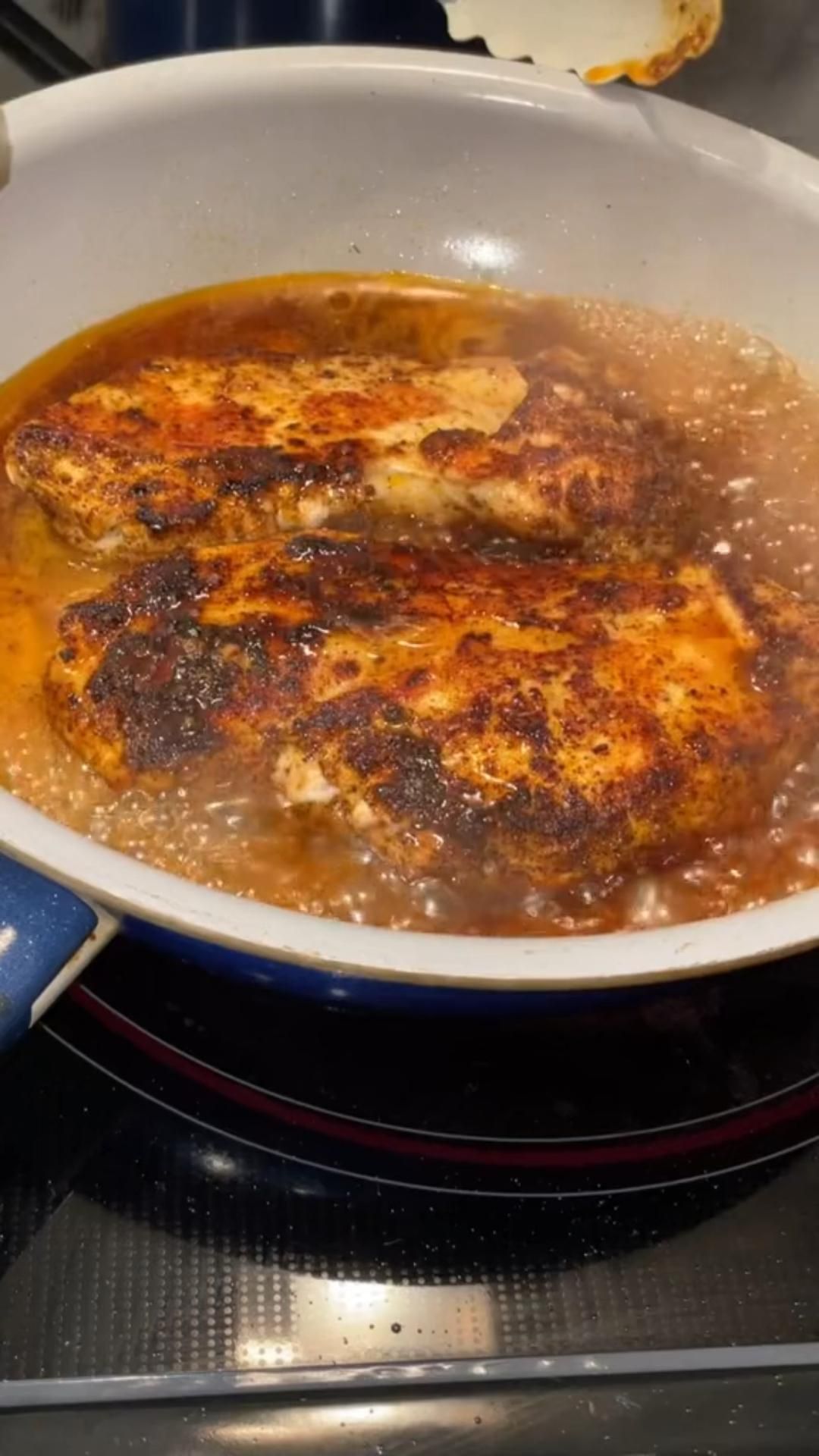
- 3Sear the First Batch — Lay 3 breasts in the pan without touching and cook undisturbed for 5 to 6 minutes until the underside is deep golden brown and releases easily. Flip and cook 5 to 6 minutes more, until the center reads 160F (71C) on an instant-read thermometer. Transfer to a plate and repeat with the remaining 3 breasts.
- 4Build the Pan Sauce — Reduce the heat to medium and add the butter and minced garlic to the same pan. Cook 30 to 45 seconds, stirring constantly, until the garlic is fragrant and pale gold but not brown, which would taste bitter.
- 5Deglaze and Reduce — Pour in the chicken broth and scrape the browned bits from the bottom with a wooden spoon. Simmer 3 to 4 minutes until the liquid reduces by about half and coats the back of the spoon.
- 6Finish the Sauce — Remove the pan from the heat and stir in the lemon juice and chopped parsley. Taste and adjust salt; the sauce should be glossy and slightly tart, not flat.
- 7Rest the Chicken — Return the chicken and any accumulated juices to the pan and let it rest 5 minutes off the heat. The internal temperature will carry over to 165F (74C), the safe serving threshold.
- 8Slice and Serve — Slice the breasts against the grain into 1/2-inch (1.25cm) pieces and spoon the pan sauce over the top. Serve immediately over rice, potatoes, or greens.

Marcus writes about personal finance and investing, with a focus on helping young professionals build wealth from scratch. He breaks down complex concepts into simple, actionable strategies.